The Simplest Points & Miles Guide: Unlock Business/First Class and Luxury Hotels with Just 2–3 Cards (Even If You Only Travel 2–4 Times a Year)
Prince Gallery Tokyo
LH First Class
Cancun
After more than 35 years of real‑world travel—spanning the Deregulation Fare Wars of the 1980s to the Pandemic Points Boom—I’ve watched a growing frustration take hold among everyday travelers. People are told to spend months (or years) accumulating miles, only to discover that their hard‑earned balances won’t actually get them to Bali, or Mali, or even Maui.
Meanwhile, the points‑and‑miles influencer ecosystem keeps pushing ever‑bigger credit‑card bonuses, urging you to click their links and chase the next “mega‑offer.” What they rarely mention is the part that actually matters: finding an award seat on the date and route you want. These credit‑card hucksters sell accumulation without execution — a “buy now, hope you can redeem later” scheme that leaves travelers holding a currency they can’t easily spend.
Step One: Decide Whether Points & Miles Make Sense for You
Before you open a single card or chase a bonus, start with one honest question:
Do points and miles actually fit your spending habits and travel goals?
1. Spend $2,000–$4,000+ per month on card‑eligible expenses Groceries, gas, utilities, insurance, streaming, daycare, medical bills, travel, even rent/mortgage via third‑party services.
2. Travel at least 1–2 times per year You don’t need to be a frequent flyer — just consistent.
3. Prefer premium cabins or upscale hotels This is where points deliver 10–20× more value.
4. Want flexibility and can follow a simple system No spreadsheets. No chaos. Just structure.
Points and miles are not a good fit if you…
[IMAGE PLACEHOLDER — Icons: Warning Triangle • Dollar Sign • No Symbol]
You carry a balance
You rarely travel
You prefer ultra‑low‑cost carriers
You don’t want to manage 2–3 programs
If you meet the criteria above, points and miles are a genuine opportunity — not hype.
You can realistically unlock:
[IMAGE PLACEHOLDER — Premium Cabin Collage: Qsuite, ANA “The Room,” Air France Business]
lie‑flat business class
premium international cabins
luxury hotels
2–4 meaningful trips per year
…using one flexible bank currency + one hotel program + 2–3 cards.
1.
Your goal is to protect and grow your purchasing power by choosing wisely where to “bank” those points.
Points and Miles Are a Currency—Treat Them Like One
Understanding points and miles becomes dramatically easier once you treat them as money—a currency with fluctuating value.
Local Currency Programs (Insert small inline logos: United MileagePlus | Delta SkyMiles | Marriott Bonvoy — approx. 80–100px each)
Every loyalty program issues its own local currency. Where you earn points = your income source. Where you store them = your local bank.
Local banks are useful but limited. They offer strong perks on their home turf—your favorite airline’s own flights—but their purchasing power is restricted to a smaller network of routes and partners.
And like any fiat currency, devaluation is constant:
dynamic pricing
stealth award chart changes
sudden mileage inflation
new fees
Your goal is simple: protect and grow your purchasing power by choosing the right place to “bank” your miles.
When you earn miles in a program inside an alliance, you’re effectively earning a readily convertible currency that can be used to book award seats across all member carriers. The miles don’t stay trapped inside one airline’s walled garden. They move—fluidly—across the alliance.
The Euro Model
Just as the Euro is accepted across multiple EU member states, miles earned in one alliance program can be redeemed across the entire alliance network.
Your miles behave like a regional currency bloc, not a local cu
Earn in one place
Spend in many
Seamless interoperability
Shared infrastructure
Broad acceptance
The Euro Model
Just as the Euro is accepted across multiple EU member states, miles earned in one alliance program can be redeemed across the entire alliance network.
Earn in one place
Spend in many
Seamless interoperability
Shared infrastructure
Broad acceptance
Your miles behave like a regional currency bloc, not a local currency.
Another Useful Analogy: The U.S. Dollar System
If the EU is one model, the United States + USD is another.
Why it matters visually: Showcase premium cabins from ANA, Lufthansa, and Singapore to instantly communicate “global luxury.”
Key benefits:
Book any partner using one program’s miles
Massive international reach
Arbitrage opportunities (same seat, different price depending on program)
Example visual: (Insert side‑by‑side comparison graphic: United Polaris vs. ANA “The Room” — 600px wide)
Now, think of the three major airline alliances—Star Alliance, Oneworld, and SkyTeam—as the major global banks with vast international networks, thousands of branches (partner airlines), and far-reaching services. Joining one alliance’s ecosystem (by earning and redeeming through a program within it) gives your points much greater liquidity and utility.
Star Alliance (the largest network, with 26 members like United, ANA, Lufthansa, Air Canada, Singapore Airlines, and more) acts like a powerhouse global bank with branches everywhere. Your “deposits” (miles in a Star Alliance program) gain massive reach: you can book flights on any partner using miles from one program, often at better rates or with lower fees. For example, booking your favorite United flight through Air Canada’s Aeroplan or Avianca LifeMiles frequently saves miles or eliminates fuel surcharges—turning a “local” redemption into a high-value international one without leaving your preferred program’s “account.”
[Insert Oneworld logo here – small inline image, approx. 120px wide]Oneworld (with 14 members including American Airlines, British Airways, Qatar Airways, Cathay Pacific, and Alaska) functions as another major international bank focused on premium service routes. Miles in one Oneworld program (e.g., British Airways Avios or American AAdvantage) unlock partner bookings that can be cheaper or more flexible. Short-haul American Airlines flights often cost far fewer Avios via British Airways’ distance-based chart than through AAdvantage directly—effectively giving your points more “global” spending power across the alliance’s network.
[Insert SkyTeam logo here – small inline image, approx. 120px wide]SkyTeam (19 members like Delta, Air France/KLM, Korean Air, China Airlines, and Virgin Atlantic) serves as a strong multinational bank with excellent coverage in Europe, Asia, and the Americas. Redeeming through Flying Blue (Air France/KLM) often yields lower-mileage awards on partner flights (including Delta) than booking directly with Delta SkyMiles, especially for transatlantic business class—again,
✈️ Do Points and Miles Make Sense for You?
The honest answer: it depends on your spending habits and travel goals.
Points and miles are a strong opportunity if you…
Have $2K–$4K+ in monthly household expenses, you can put on plastic (groceries, utilities, rent/mortgage via services, DoorDash—anything!).
Travel at least once or twice per year.
Prefer premium cabins (business/first) or upscale hotels.
Value flexibility and are willing to learn a few strategies.
Points and miles are less useful if you…
Carry a balance (interest wipes out any value—always pay in full!).
Rarely travel.
Prefer ultra-low-cost carriers or basic economy fares.
Don’t want to manage multiple programs.
Points and miles are less useful if you…
Carry a balance (interest wipes out any value—always pay in full!).
Rarely travel.
Prefer ultra-low-cost carriers or basic economy fares.
Don’t want to manage multiple programs.
The “personal feel” test Ask yourself:
The “personal feel” test Ask yourself:
Do I want to travel more than I currently do?
Would I enjoy business class if it didn’t cost cash?
Do I like optimizing things?
If yes, then points and miles are a genuine opportunity—not hype.
💳 2. Comparing the Most Lucrative Credit Card Offers
Capital One Venture X Why it’s compelling: Strong, simple earning (2x everywhere, 10x hotels/cars via portal); transfers to all three alliances; excellent lounge access for the price. Best for: Travelers who want premium perks without premium complexity.
The Business Platinum Card® from American Express Elevated Welcome Offer: Often 150,000–200,000 Membership Rewards points (varies by channel). Why it’s powerful: Exceptional transfer partners; 35% Pay-With-Points rebate on eligible flights; premium lounge network (Centurion, Delta Sky Clubs when flying Delta). Best for: High-spending business owners who want maximum flexibility and luxury.
Chase Sapphire Reserve / Preferred Example value breakdown: Earn 60,000–125,000 points after minimum spend (varies); worth $1,500–$2,500 toward flights/hotels through Chase Travel; plus $300+ annual travel credits and protections. Total first-year value: Often $3,000–$5,000+. Best for: Travelers who want a balanced ecosystem with strong travel protections and easy redemptions.
Pro Tip: Apply for one ecosystem first (e.g., Chase for Sapphire + everyday cards), meet the spend
Chase Sapphire Reserve / Preferred Example value breakdown: Earn 60,000–125,000 points after minimum spend (varies); worth $1,500–$2,500 toward flights/hotels through Chase Travel; plus $300+ annual travel credits and protections. Total first-year value: Often $3,000–$5,000+. Best for: Travelers who want a balanced ecosystem with strong travel protections and easy redemptions.
Pro Tip: Apply for one ecosystem first (e.g., Chase for Sapphire + everyday cards), meet the spend responsibly, then expand. Always pay off monthly—no interest!
=. Where Should You “Bank” Your Points?
Your first big decision: Do you travel mostly domestically or internationally? If you’re near a major airline hub, a co-branded card might help for everyday perks. But the real win is separating your everyday flyer (for status/upgrades) from your points bank (for redemptions). Winning is about earning big and spending small—too much content focuses on earning; far less on smart redemptions.
Example: Delta SkyMiles redemptions are often expensive due to dynamic pricing. Delta used to have fair partner awards, but they stopped publishing them to hide how overvalued their own program looks.
Delta SkyMiles (SkyTeam) includes:
Delta Air Lines
KLM Royal Dutch Airlines
Air France
Korean Air
Aeroméxico
China Airlines
Think of loyalty programs like financial institutions. Some are flexible, some restrictive, and some offer incredible “exchange rates” when redeeming for flights.
Avianca LifeMiles (Star Alliance) — My “secret weapon” for accessible premium travel Strengths:
Often the cheapest Star Alliance redemptions (same seats as United or Aeroplan, but lower miles + no fuel surcharges—saving $200–$800).
Great for Lufthansa, ANA, EVA Air business class.
Frequent transfer bonuses from Amex, Capital One, Citi, Bilt.
Miles sell cheap during promos (e.g., recent 155% bonus through Feb 23, 2026, dropping cost to ~1.3¢ each).
Deep Dive: Step-by-Step LifeMiles Booking Tutorial (Optional – For When You’re Ready to Try It)
(Skip this if you’re just getting the overview—come back later when you’re searching for a specific trip!)
The LifeMiles website (lifemiles.com) handles most bookings online, but it’s notoriously inconsistent—availability often hides unless you tweak settings, and glitches are common. Many users succeed by scouting first on easier tools like Seats.aero (for alerts) or United.com/Aeroplan.com (for Star Alliance space), then confirming on LifeMiles.
Create/Log Into Your Account Go to lifemiles.com (use desktop browser—Firefox or Chrome often works best). Sign up free (email, password, basic info). Log in—you must be logged in to search/book.
Search for Award Availability (The Key Step)
Click Travel > Travel with miles (or direct link: lifemiles.com/fly/find).
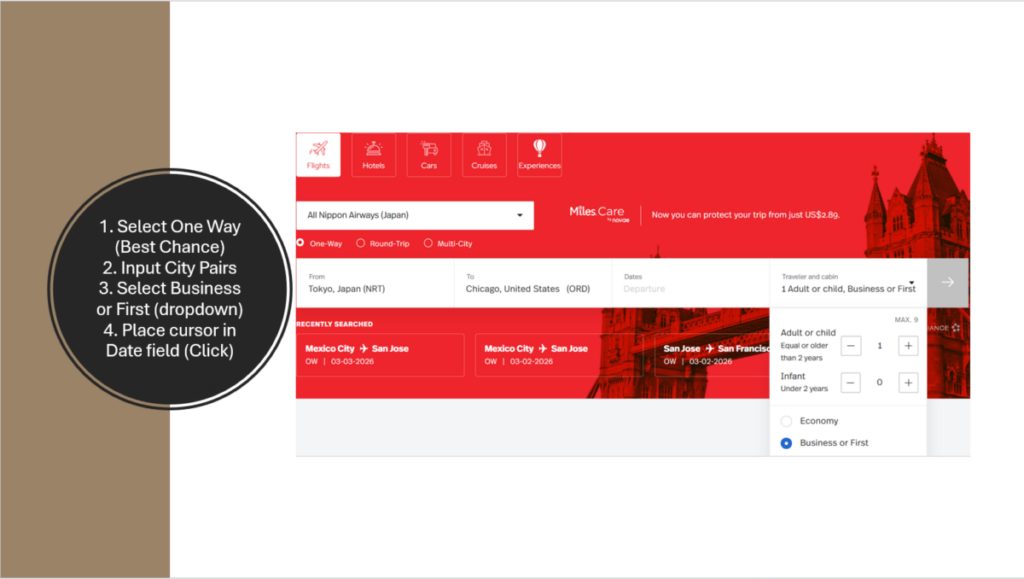
Enter departure/arrival (e.g., “United States” to “Japan”), dates (flexible? use calendar), passengers (start with 1), cabin (Business/First).
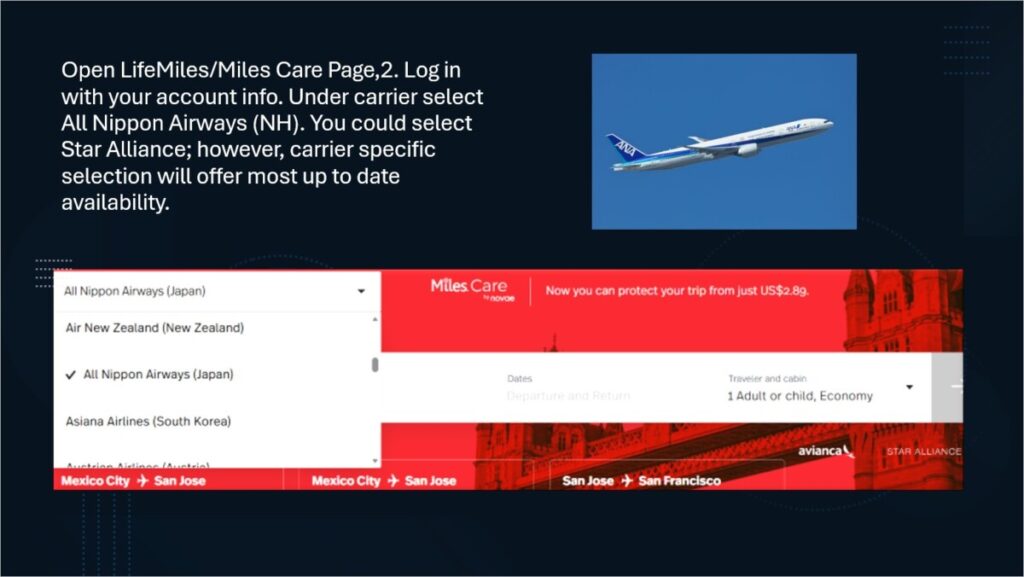
Or select a specific airline (e.g., “ANA”, “United Airlines”, “EVA Air”) — this uncovers “hidden” space that Smart misses (top 2026 tip).
Search → Results show calendar/list with miles + fees (~$25–$50 flat + taxes; no surcharges on partners).
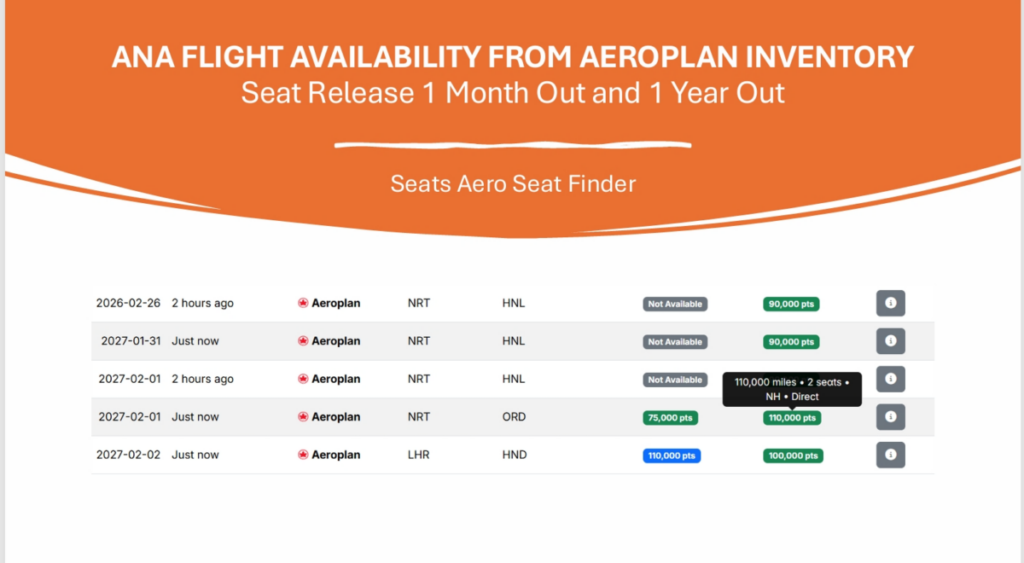
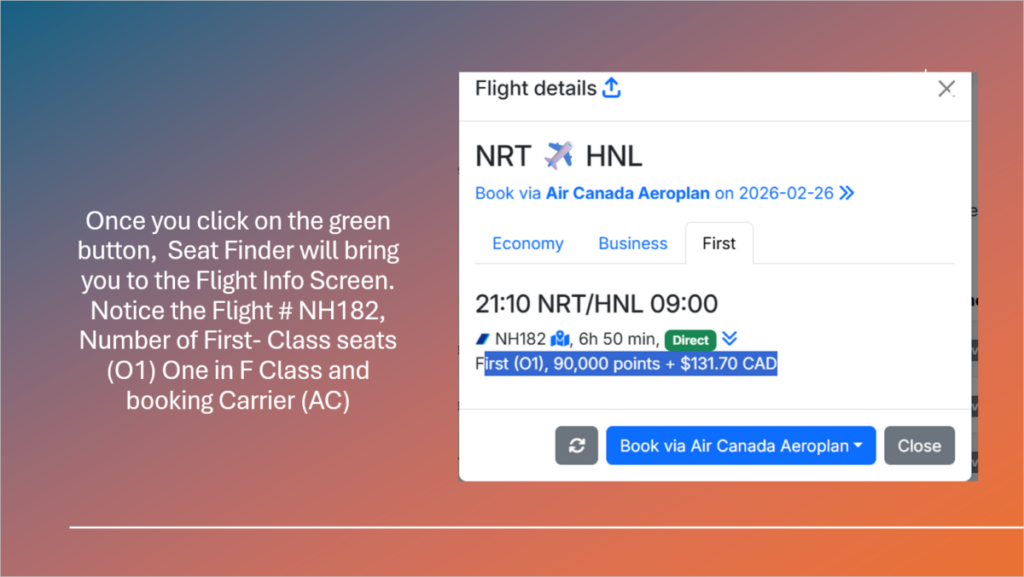
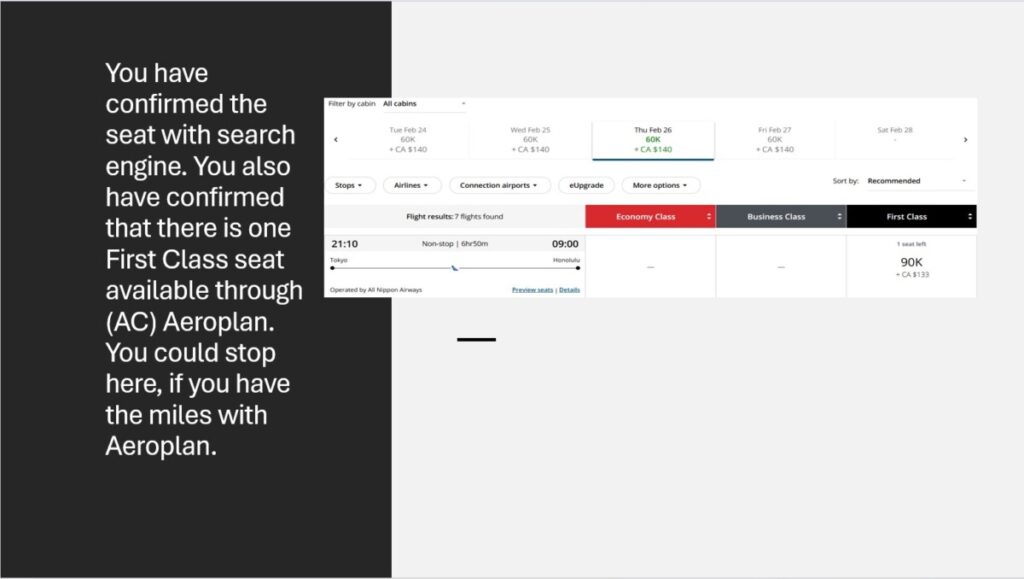
ANA NRT-HNL availability showing 90,000 points on Aeroplan (often bookable via LifeMiles at similar or lower rates with no surcharges). Compare across programs like Velocity, United, and Aeroplan to confirm space.
Critical dropdown (above fields): Defaults to “Smart Search”—change it!
/Critical dropdown (above fields): Defaults to “Smart Search”—change it!
LifeMiles calendar view – Available departure dates for NRT to HNL (e.g., Jan 31, 2027 nonstop ANA flight highlighted). Use this to spot saver-level dates after selecting the airline.
ANA NRT-HNL availability showing 90,000 points on Aeroplan (often bookable via LifeMiles at similar or lower rates with no surcharges). Compare across programs like Velocity, United, and Aeroplan to confirm space.
LifeMiles calendar view – Available departure dates for NRT to HNL (e.g., Jan 31, 2027 nonstop ANA flight highlighted). Use this to spot saver-level dates after selecting the airline.
Or select a specific airline (e.g., “ANA”, “United Airlines”, “EVA Air”) — this uncovers “hidden” space that Smart misses (top 2026 tip).
Search → Results show calendar/list with miles + fees (~$25–$50 flat + taxes; no surcharges on partners).
Pro Tip: Use Seats.aero alerts first to spot ANA availability (e.g., Tokyo NRT to Honolulu HNL business). If it shows on Aeroplan (90K points) or United (higher dynamic), check LifeMiles for lower pricing.
[Insert Screenshot 1 here]Caption / Alt Text: Seats.aero real-time alert table – ANA NRT-HNL availability showing 90,000 points on Aeroplan (often bookable via LifeMiles at similar or lower rates with no surcharges). Compare across programs like Velocity, United, and Aeroplan to confirm space.
[Insert Screenshot 2 here]Caption / Alt Text: LifeMiles search form – Select “Nippon Airways (Japan)” (ANA) from the dropdown to target NRT-HNL or similar routes and reveal partner-specific saver space.
[Insert Screenshot 3 here]Caption / Alt Text: LifeMiles calendar view – Available departure dates for NRT to HNL (e.g., Jan 31, 2027 nonstop ANA flight highlighted). Use this to spot saver-level dates after selecting the airline.
Select & Book
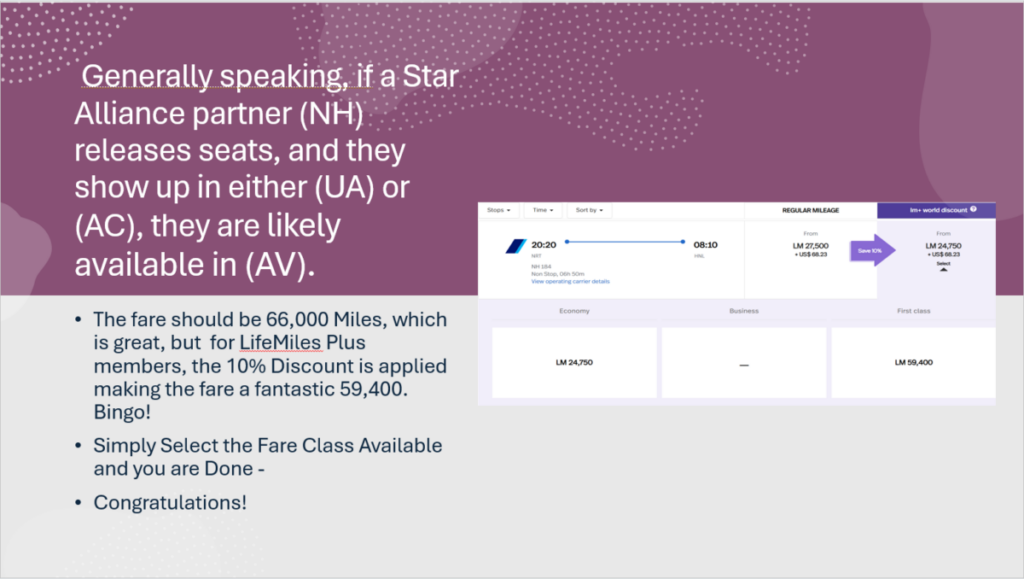
Click a flight → Review (stops, times, aircraft).Weaknesses:
Customer service minimal (but online booking works for most).
Best use cases (2026 sweet spots):
U.S. to Europe business: 63,000–80,000 miles one-way (e.g., major U.S. gateways to Zurich on SWISS).
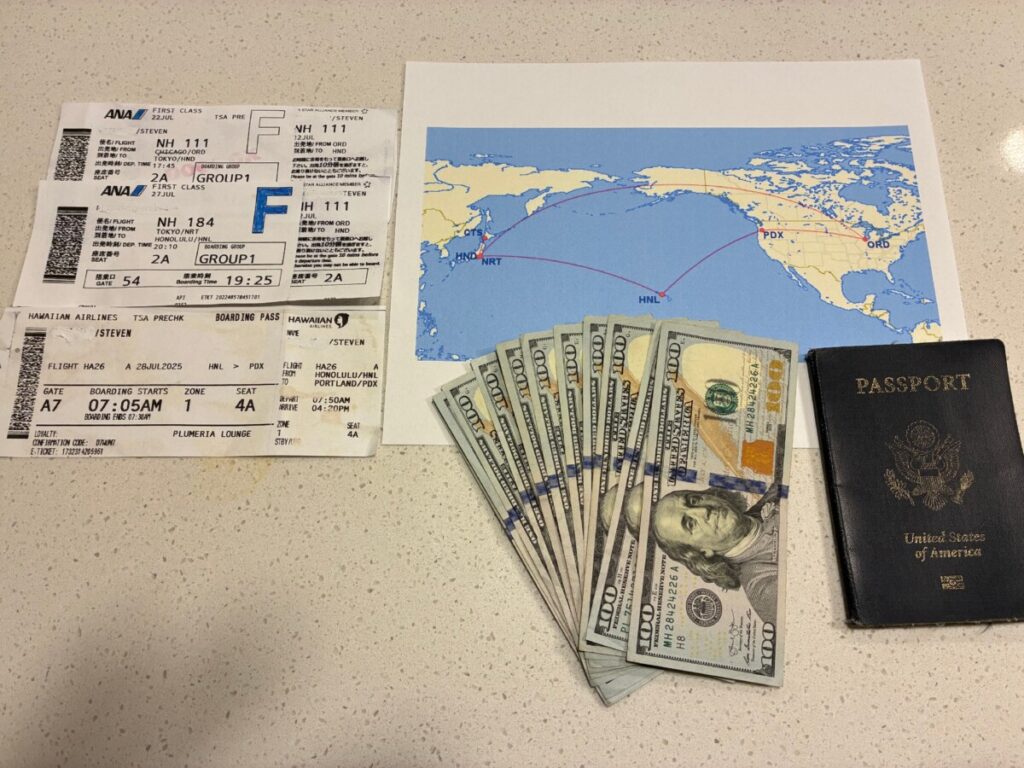
U.S. to Asia business: 90,000–100,000 miles one-way (e.g., from the U.S. mainland to Tokyo on ANA “The Room”—private suites, excellent service—for far less than United’s dynamic rates). Hawaii to Japan on ANA: Just 48,000 miles one-way.
Mixed-cabin hacks: Combine long-haul business + short economy to drop costs 20–30%.
British Airways Avios (Oneworld) Strengths: Distance-based sweet spots; easy to earn (Amex, Chase, Capital One, Bilt); combine across BA/Iberia/Aer Lingus/Qatar. Weaknesses: High surcharges on BA long-haul. Best use cases: Short domestic flights; Qatar Qsuite; Iberia business to Madrid.
Delta SkyMiles (SkyTeam) Strengths: No close-in fees; good Delta metal availability; strong domestic/last-minute. Weaknesses: Dynamic pricing; poor long-haul premium value; Amex transfers only. Best use cases: Domestic; flash sales.
💡 4. Which Programs Offer the Best “Deals”?
If “deal” means highest cents-per-point value for premium cabins, here are the standouts (2026 reality):
Top Value Programs (High cpp for premium redemptions)
World of Hyatt: 1.7¢/point (top hotel sweet spots).
ANA Mileage Club: 100K round-trip business to Japan on ANA (low season).
Avianca LifeMiles: 90K–100K business to Asia (no surcharges on ANA/EVA).
British Airways Avios: Short-haul sweet spots; Qatar Qsuite.
Programs That Offer Convenience (but not always value)
Chase Ultimate Rewards: Flexible transfers/redemptions via portal.
Amex Membership Rewards: Broad partners; great for business perks.
Capital One Miles: Simple 2x earning; portal boosts.
Delta SkyMiles: Easy domestic/last-minute.
United MileagePlus: Dynamic but flexible one-ways.
🧭 5. Final Thoughts: Strategy Over Luck
Maximizing travel rewards isn’t about chasing every card or program. It’s about:
Understanding your spending.
Choosing one or two strong card ecosystems.
Banking points in flexible currencies (e.g., transferable like Chase/Amex/Capital One).
Redeeming through programs that offer real value (LifeMiles for Star Alliance premium without drama).
When done right, points and miles turn aspirational travel into something attainable—not someday, but on your next trip. Start small, pay in full, search availability first (tools: United.com for Star Alliance scouting, Seats.aero alerts), then transfer miles. Patience beats luck every time.
[image1.jpeg] — Example of a luxury business-class cabin redemption (e.g., ANA “The Room”). [image2.jpeg] — Award search screenshot showing LifeMiles pricing. [image3.png] — Comparison chart of top programs.
Ready to dive deeper? Share your travel goals (e.g., Asia premium or Europe business), and I can tailor next steps.
This version keeps the article at roughly the same length (~1,310 words now) and reads even more smoothly for beginners. Let me know if you’d like any other final adjustments!
Want to know when the best deals hit? Sign up for our newsletter and be the first to hear about flight sales, hotel steals, and simple ways to make your points work harder for you.