
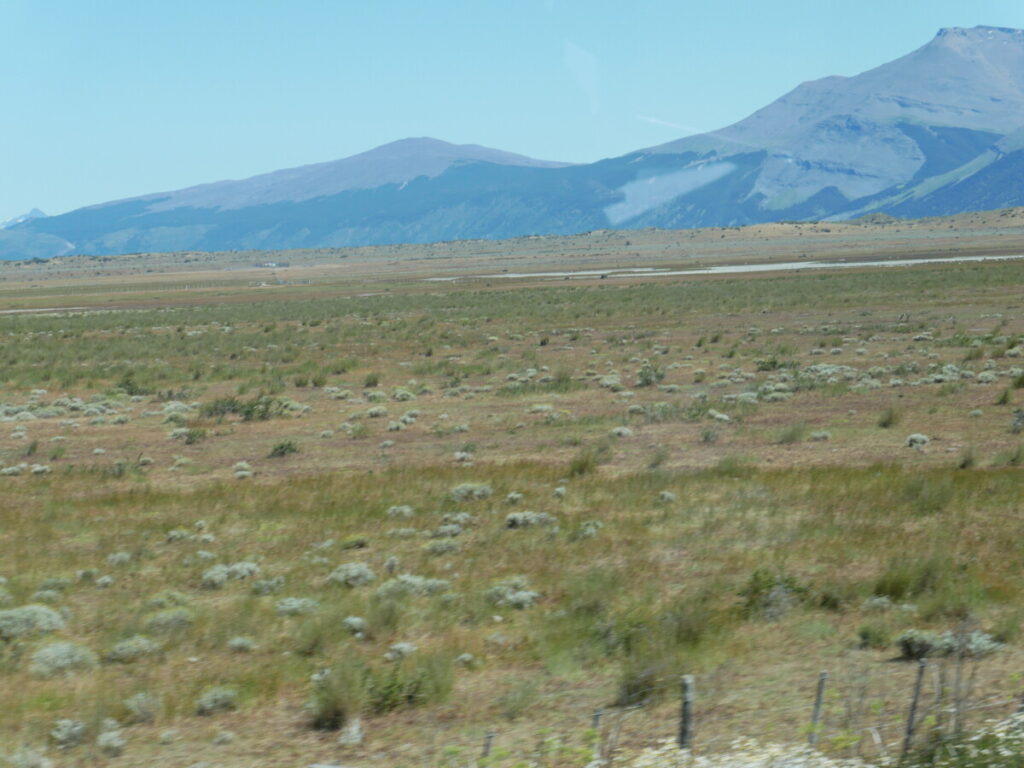
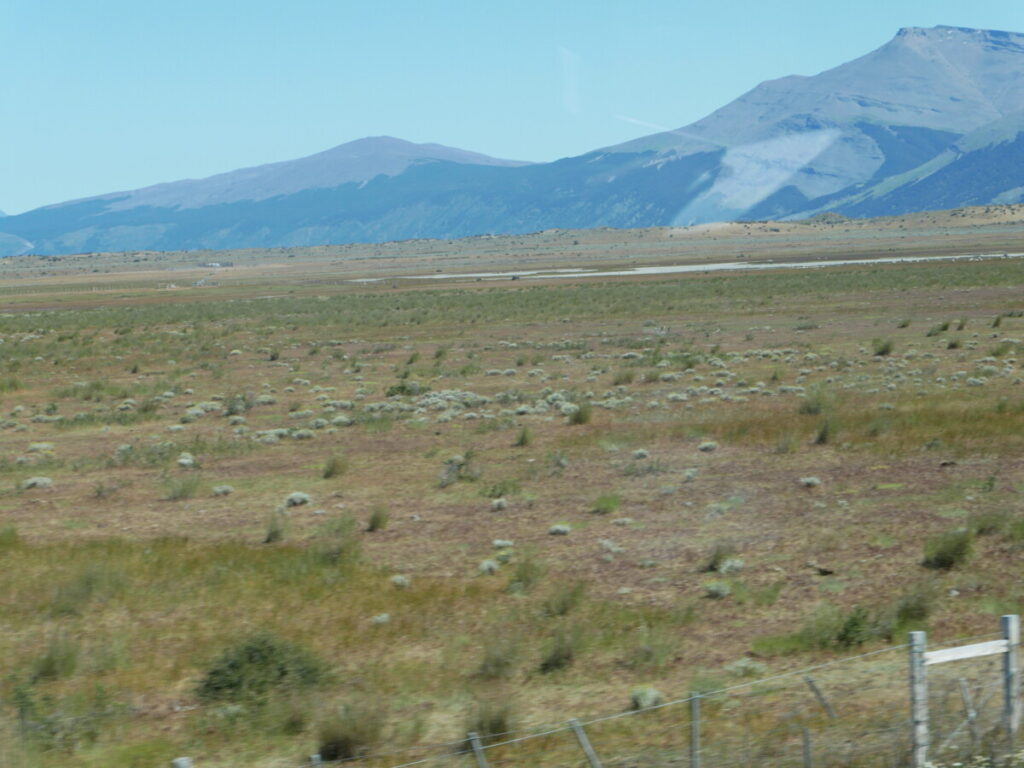
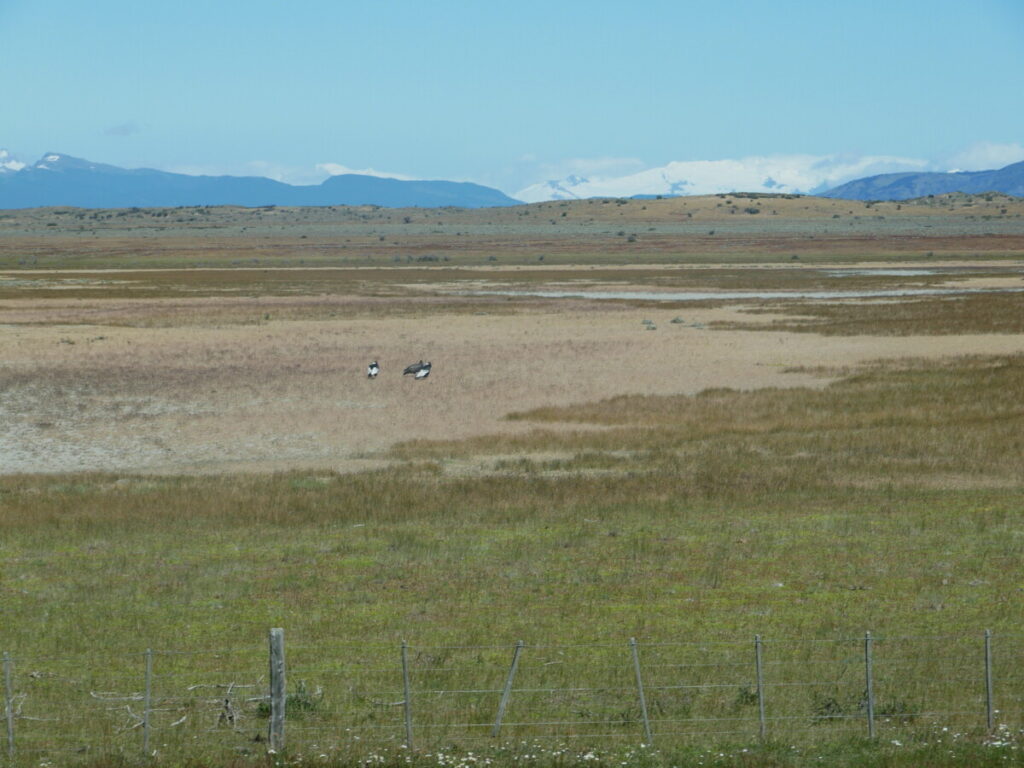
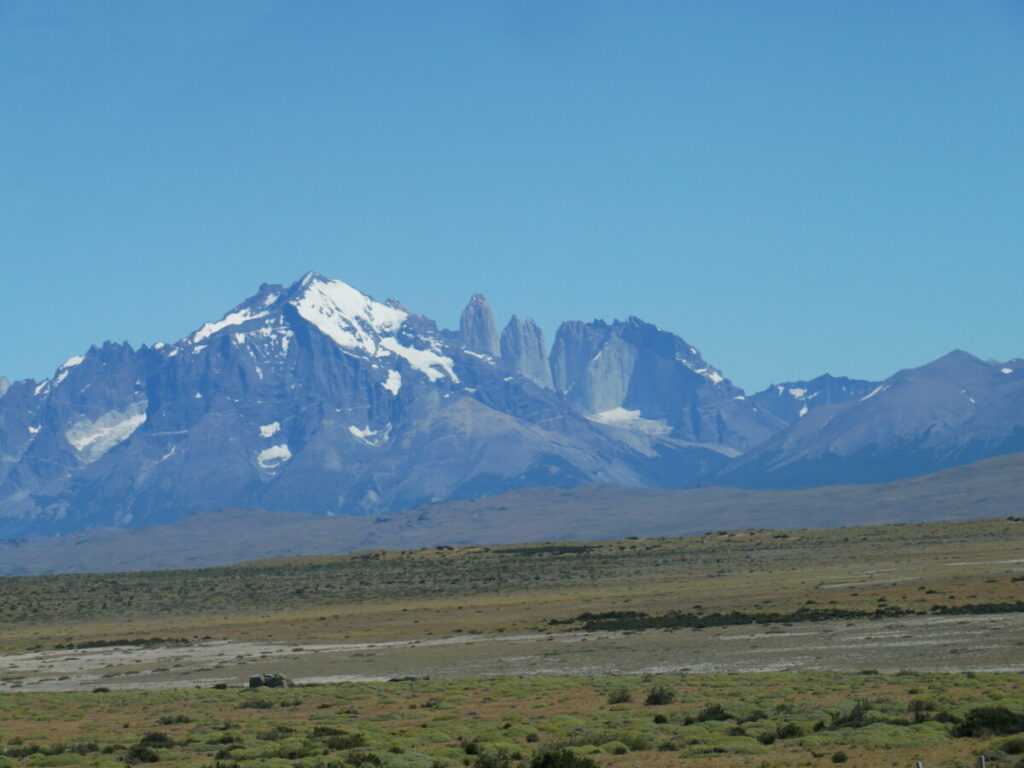
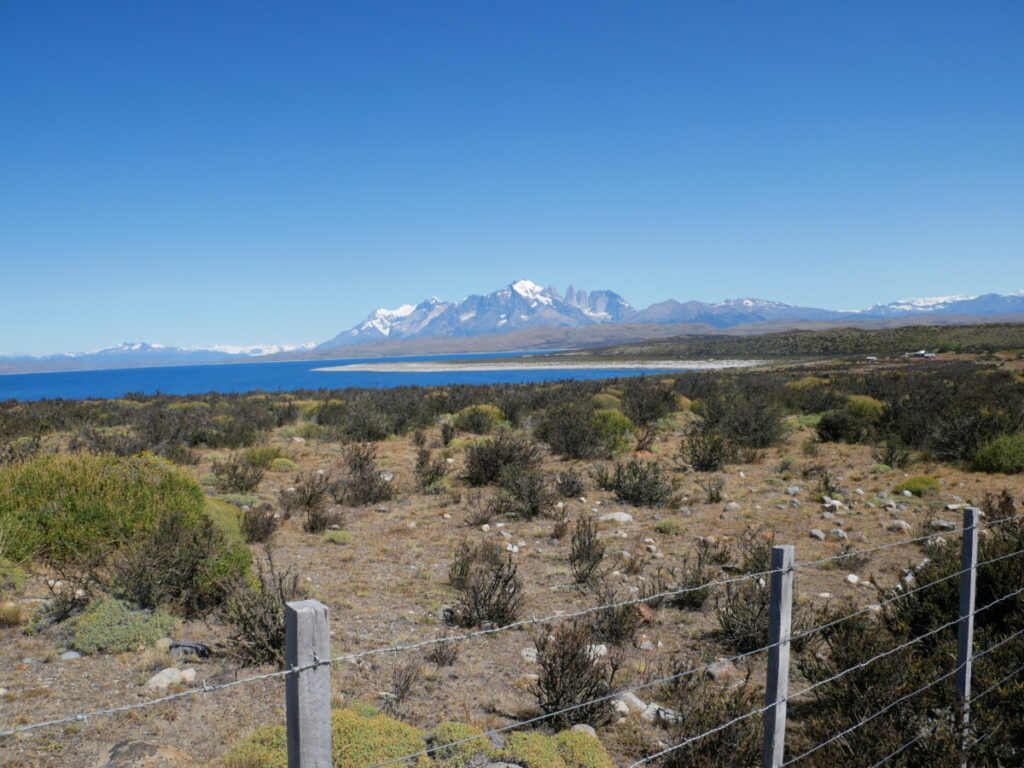
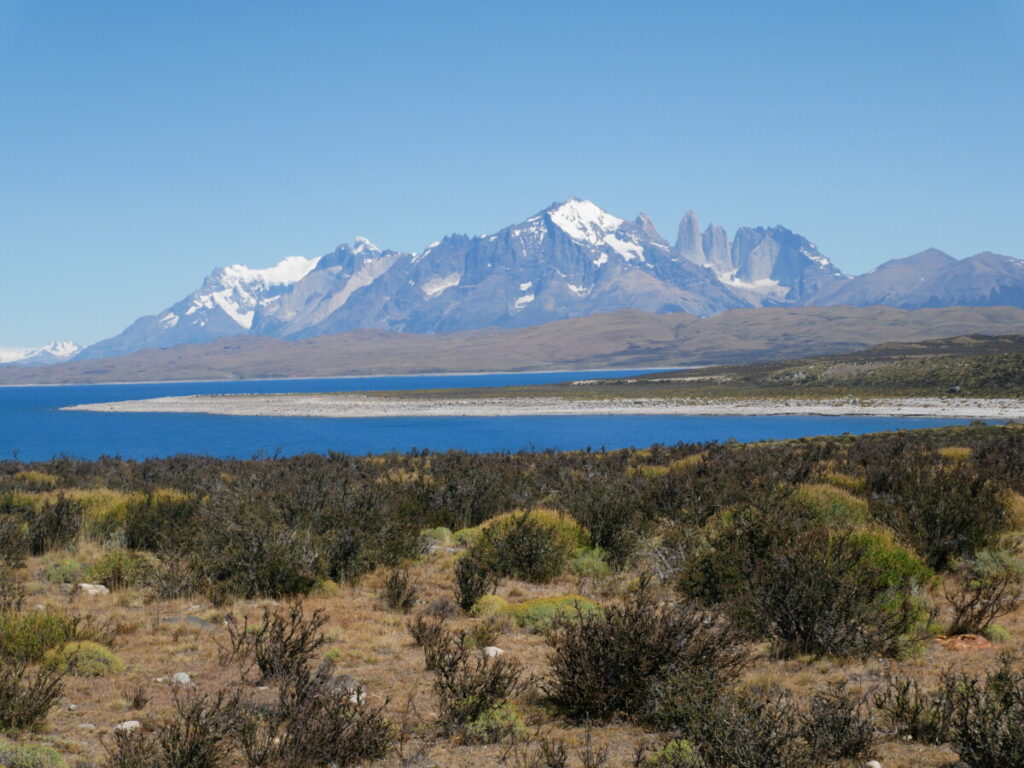
Above: Dry Patagonian Steppe. Looking west across Lago Argentine, its electric blue color due to the reflective properties of the glacial sediments. The bluer the sky the bluer the bluer the water.
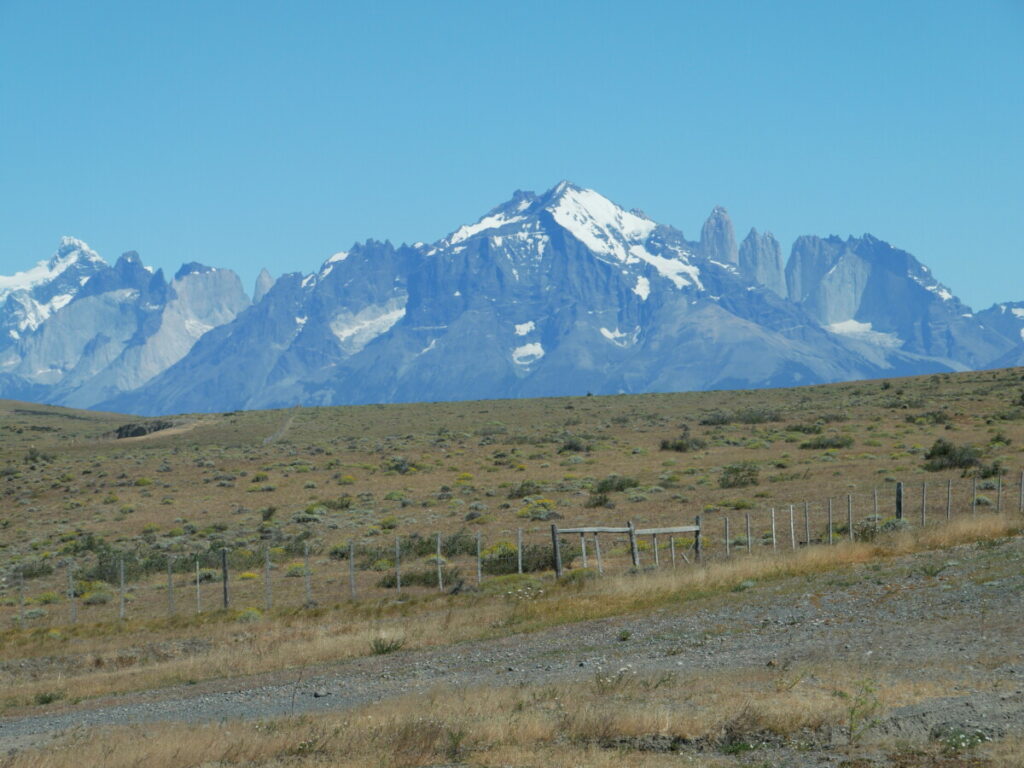
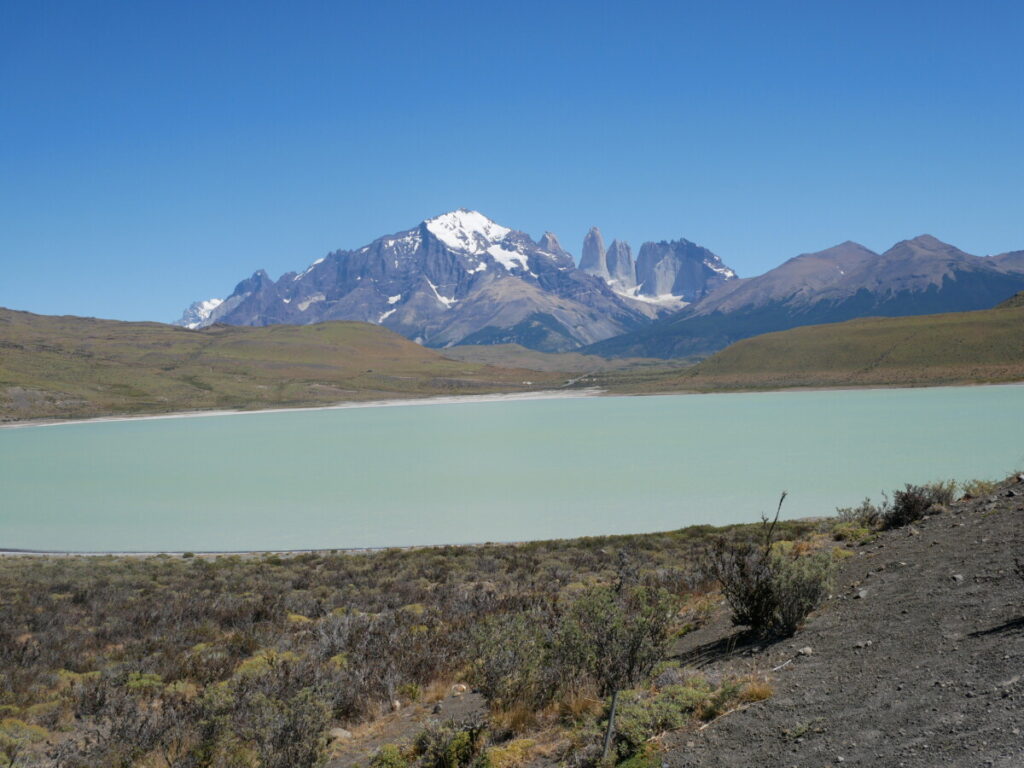
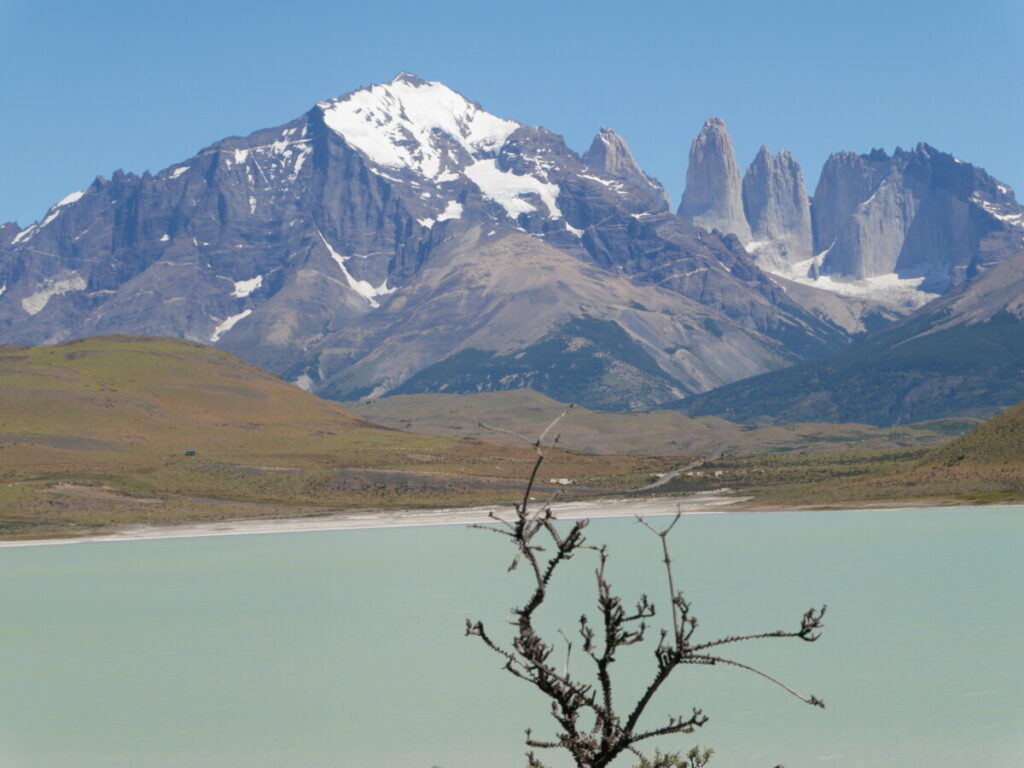
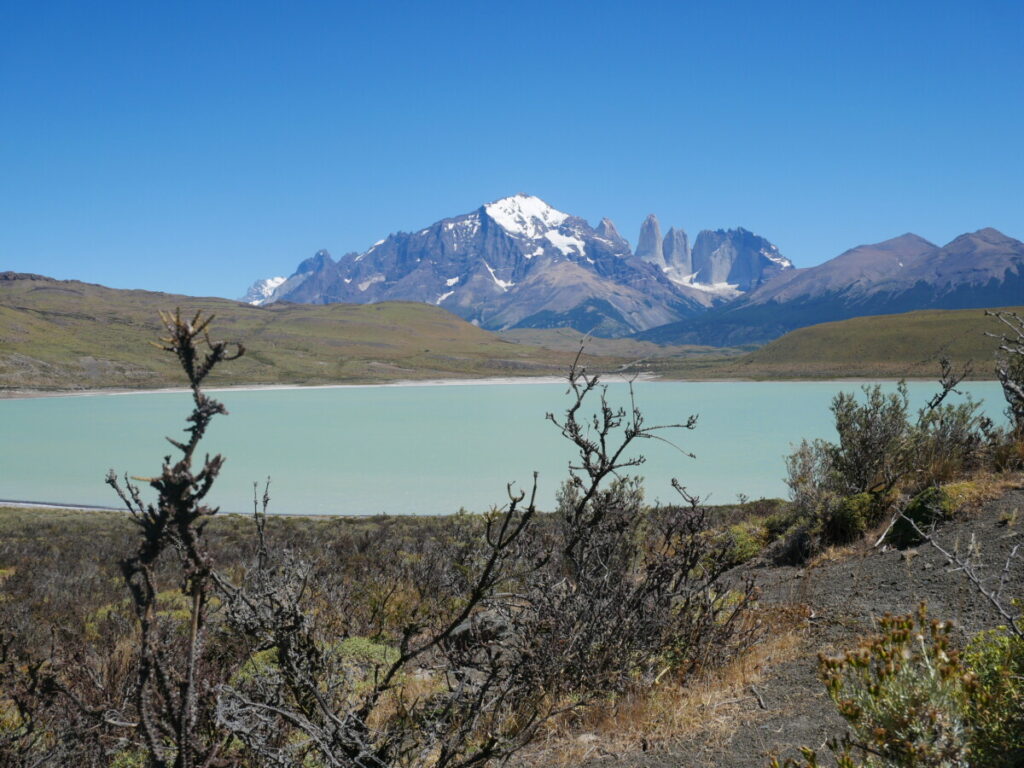
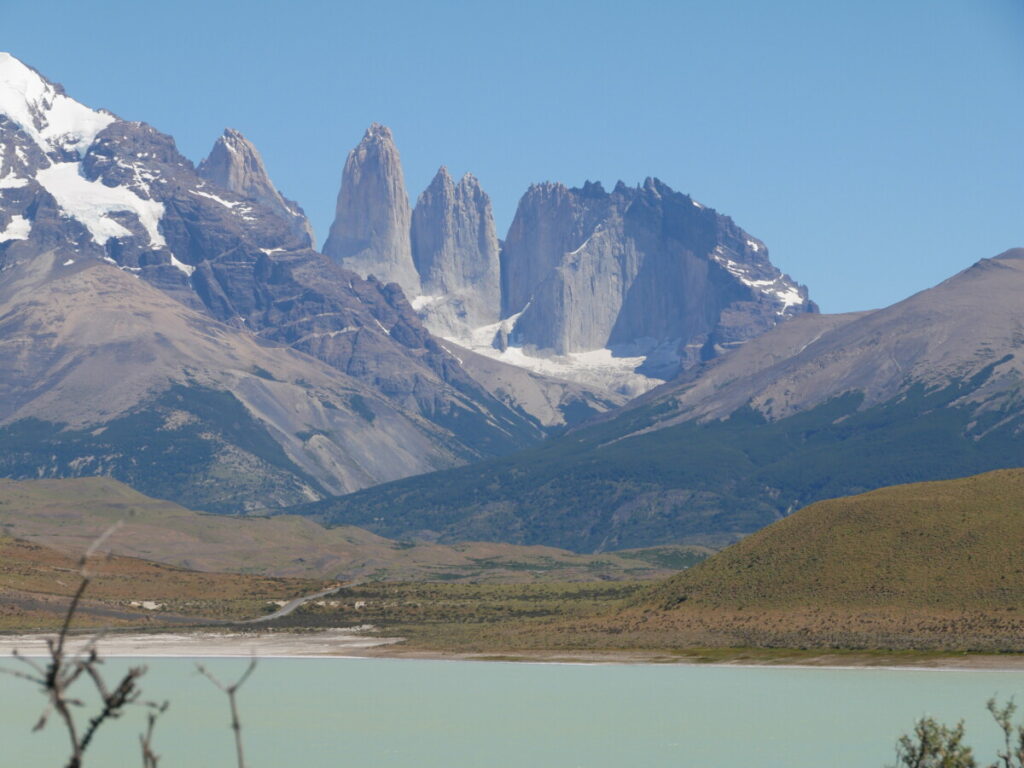
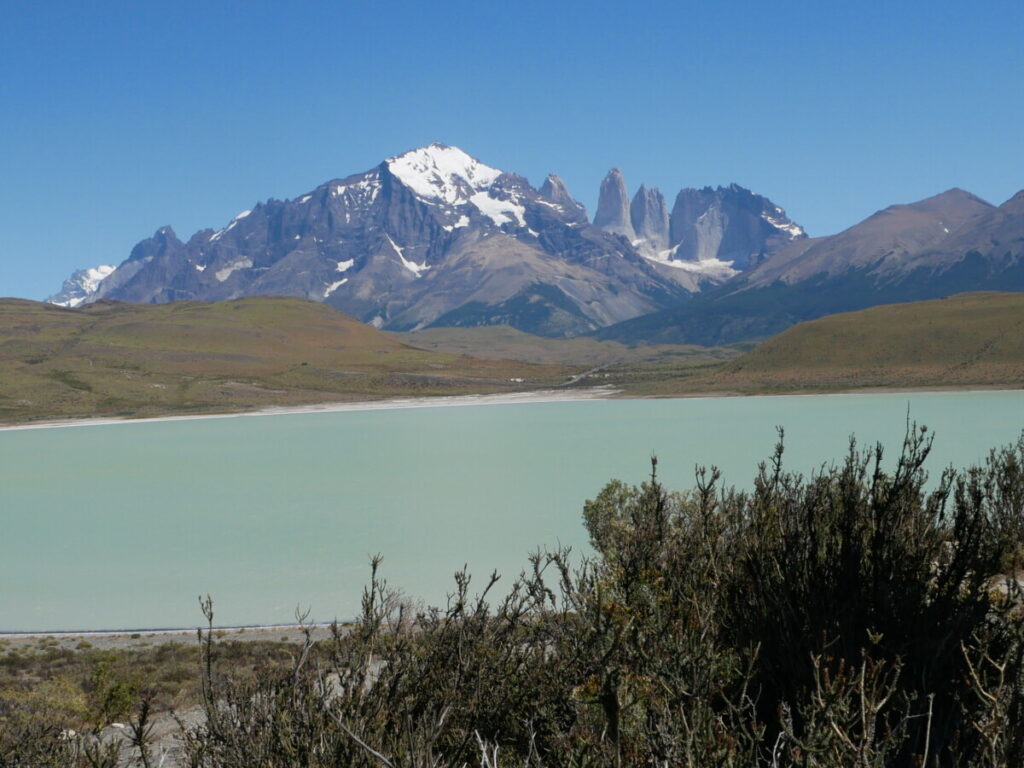
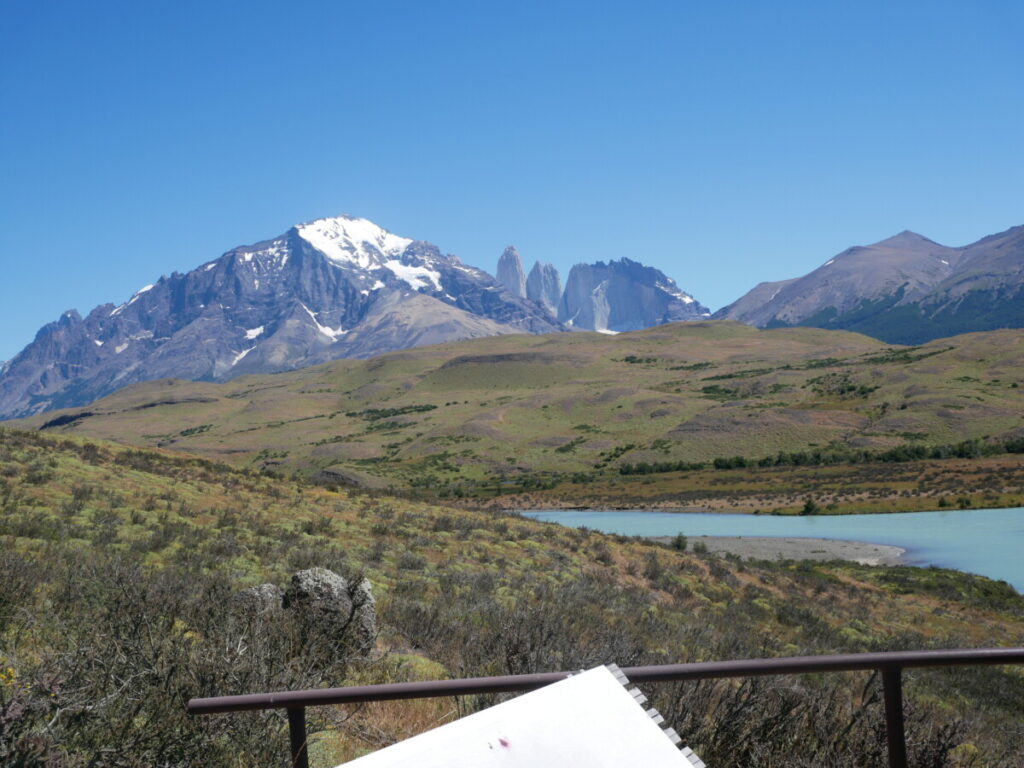
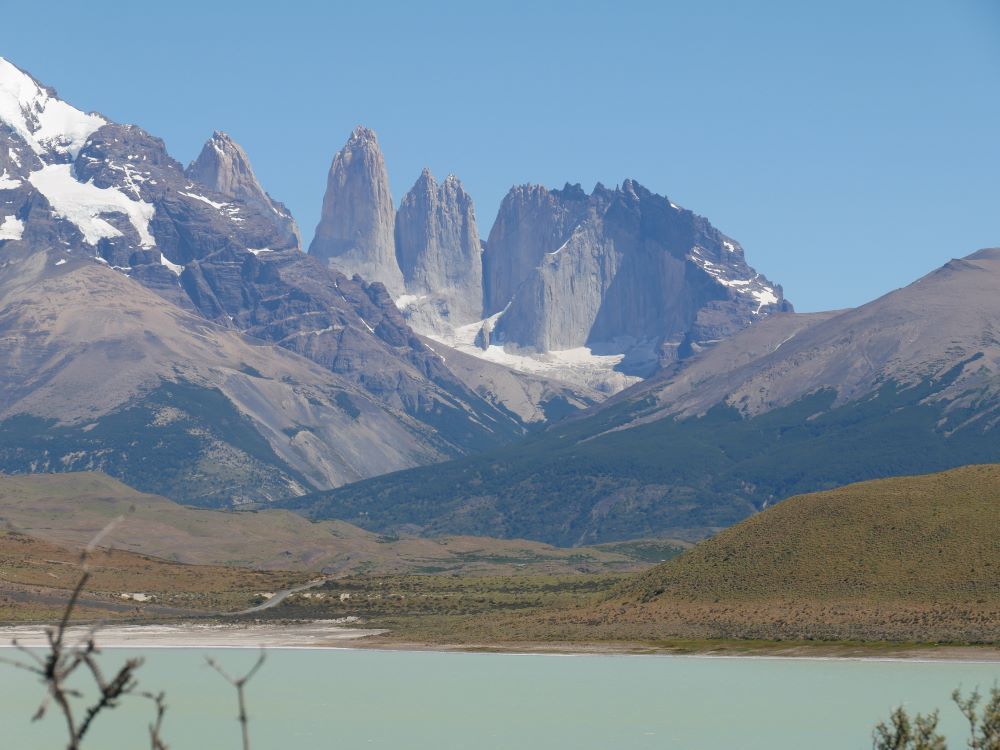
From the Argentina side, travelers enter Chile’s Torres del Paine Park via the East entrance where the first feature is Lago Amargo or “Bitter Lake”. It’s alkalinity due to high calcium carbonate levels which leave the waters with a sultry greyish green color. The salt precipitates can be seen along the shorelines. In the distance rise the three granite towers or “Torres” in blue. The large granite Massif can be seen to the right of the pinacles.
- Features: Dry shrubland, distant snow-capped peaks, deep blue lake
Section 2:
From the Argentina side, travelers enter Chile’s Torres del Paine Park via the East entrance where the first feature is Lago Amargo or “Bitter Lake”. It’s alkalinity due to high calcium carbonate levels which leave the waters with a sultry greyish green color. The salt precipitates can be seen along the shorelines. In the distance rise the three granite towers or “Torres” in blue. The large granite Massif can be seen to the right of the pinacles.
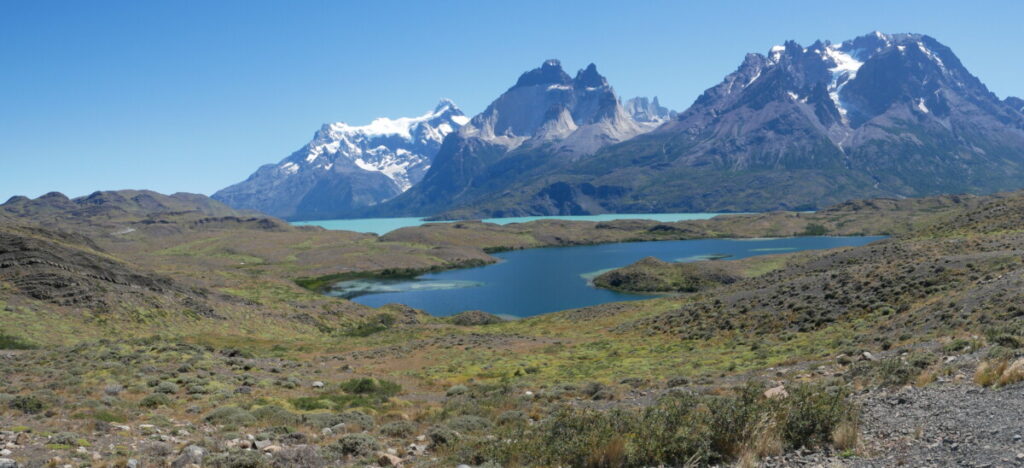
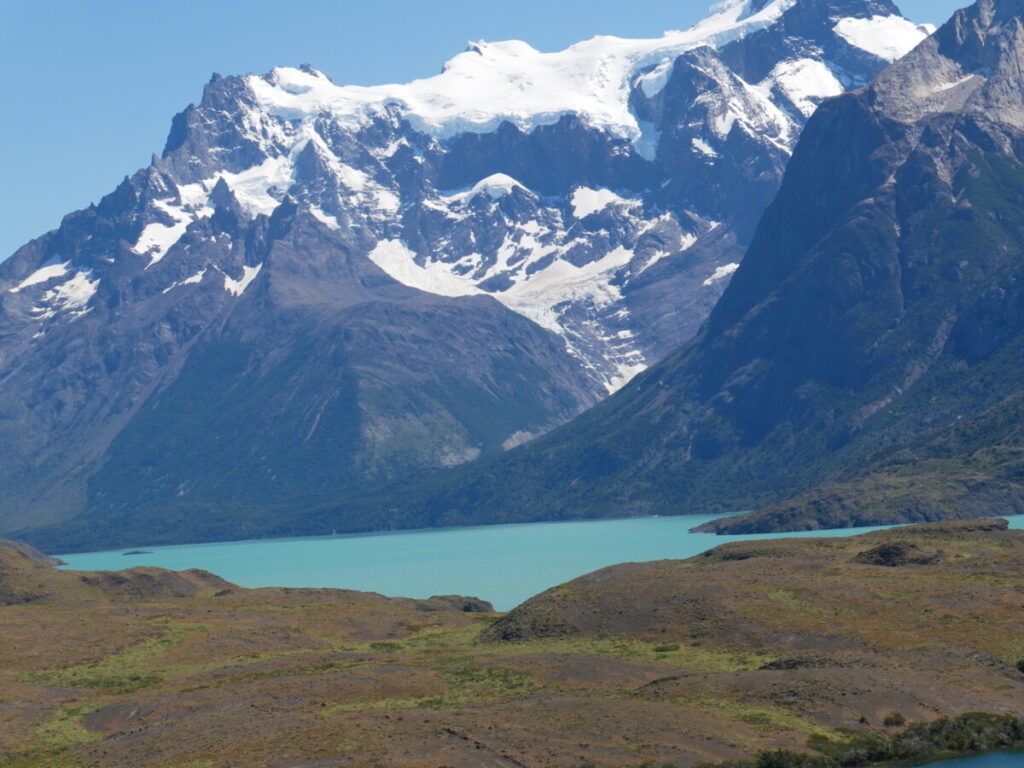
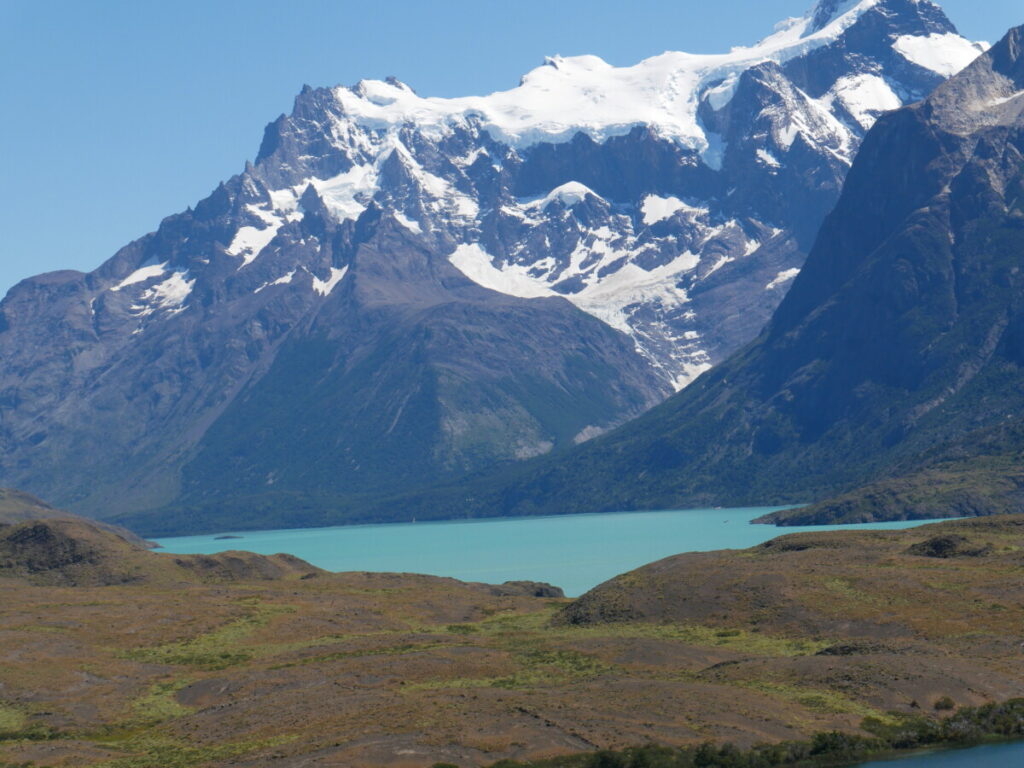
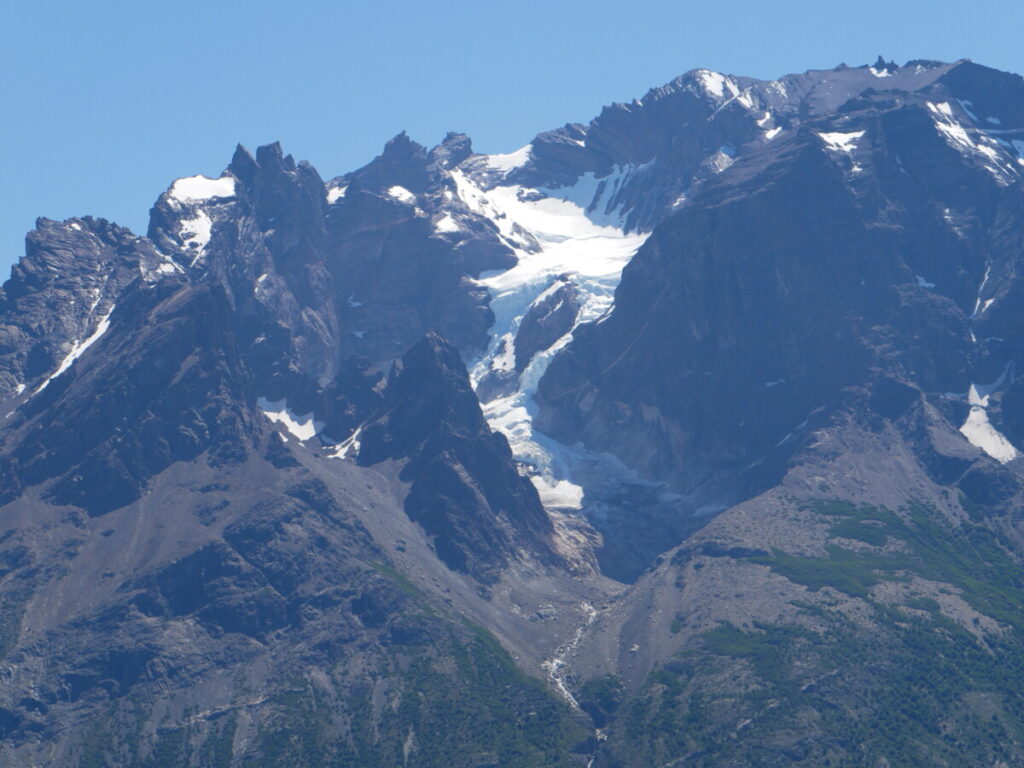
Section 2: Lake Nordenskjöld Corridor
Images 4–6
- Location: Mid-park, near Lake Nordenskjöld
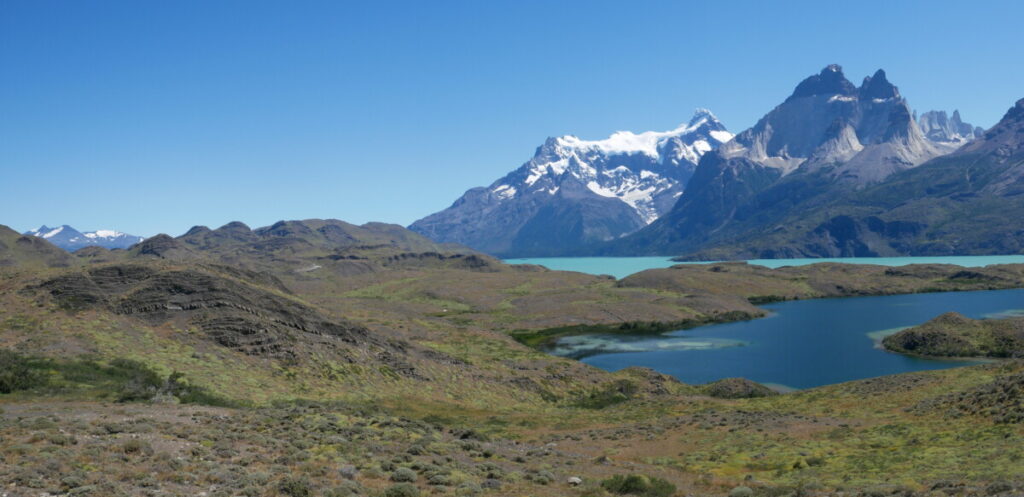
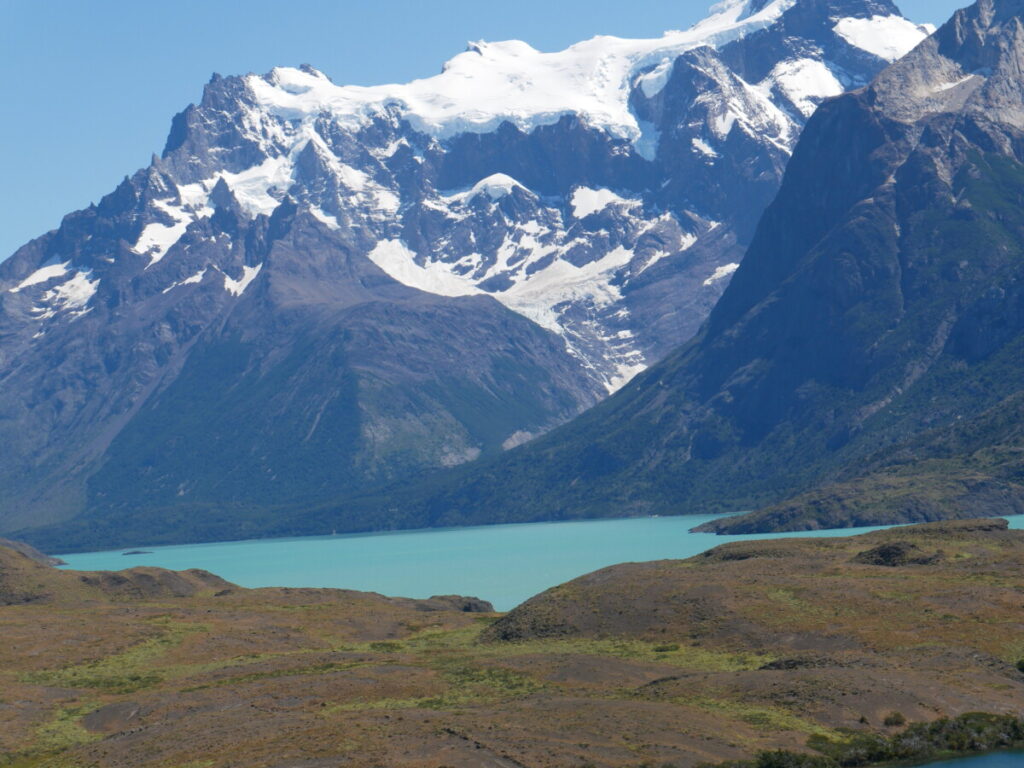
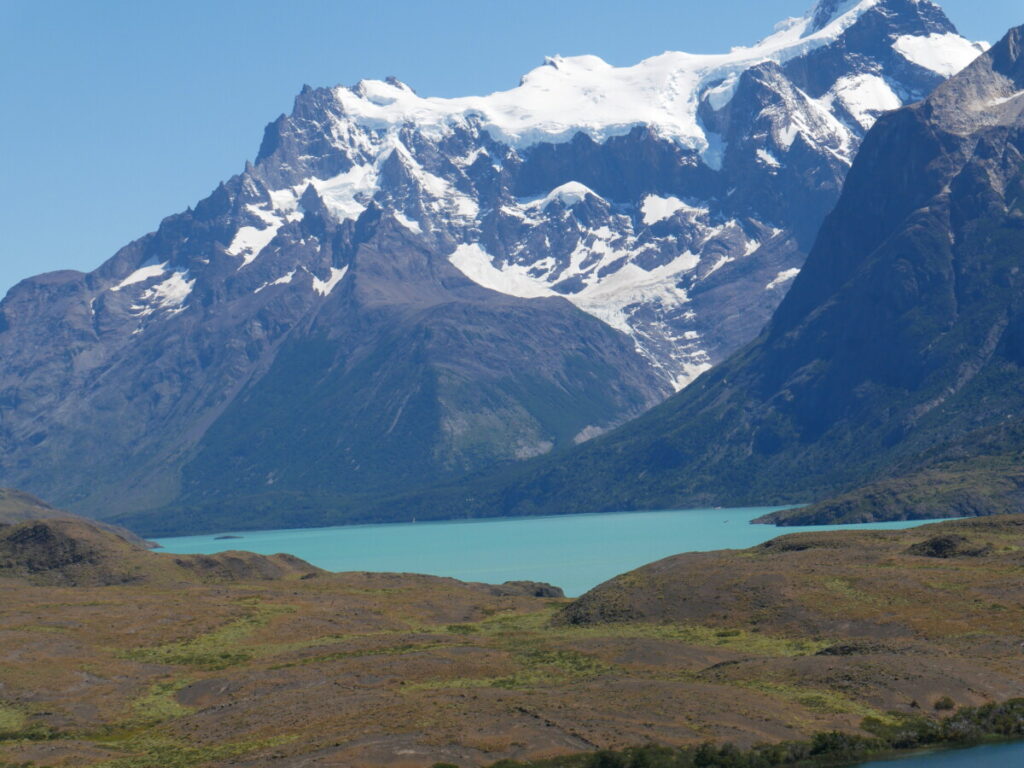
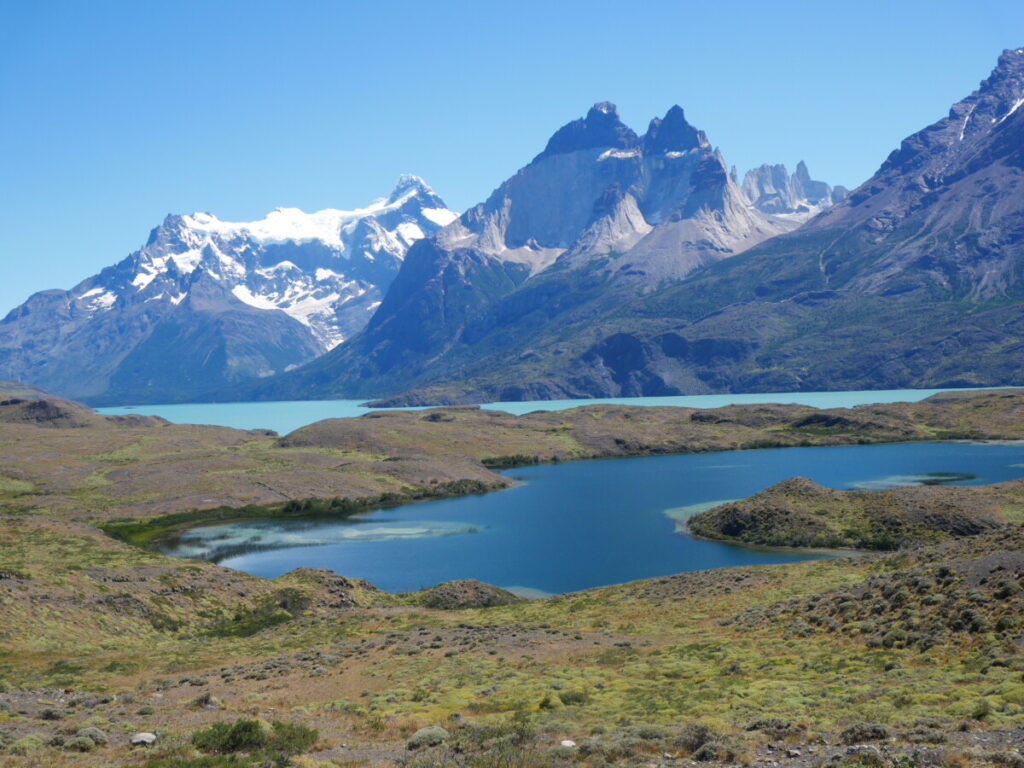
- Features: Turquoise lake, sparse vegetation, dramatic peaks
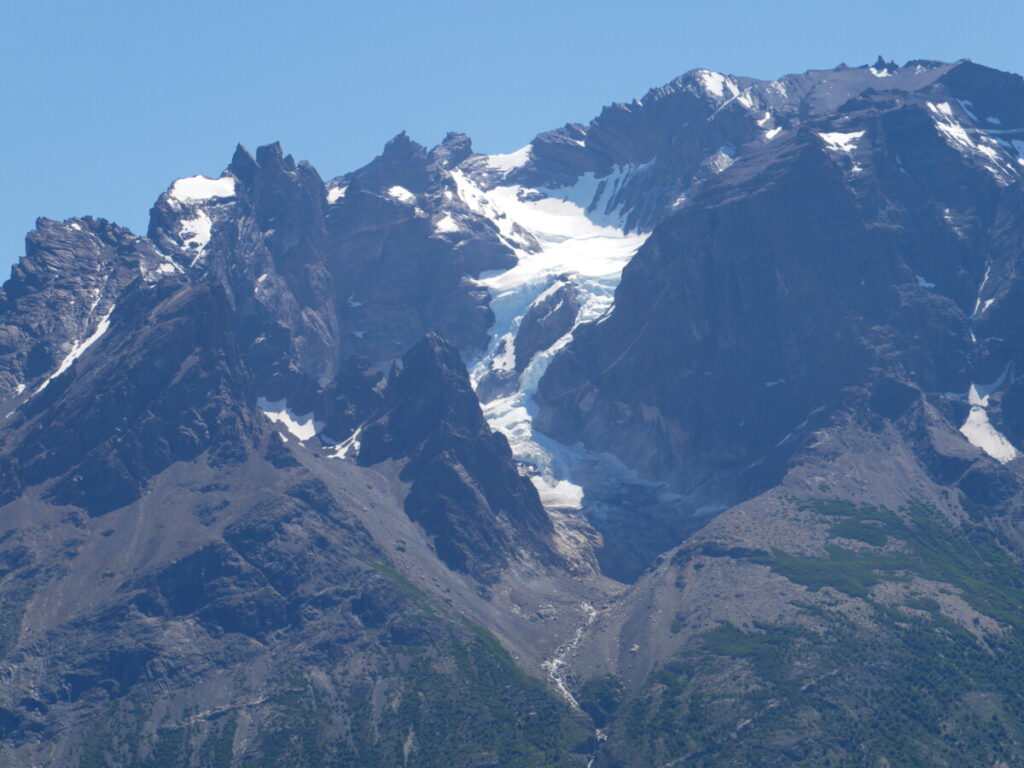
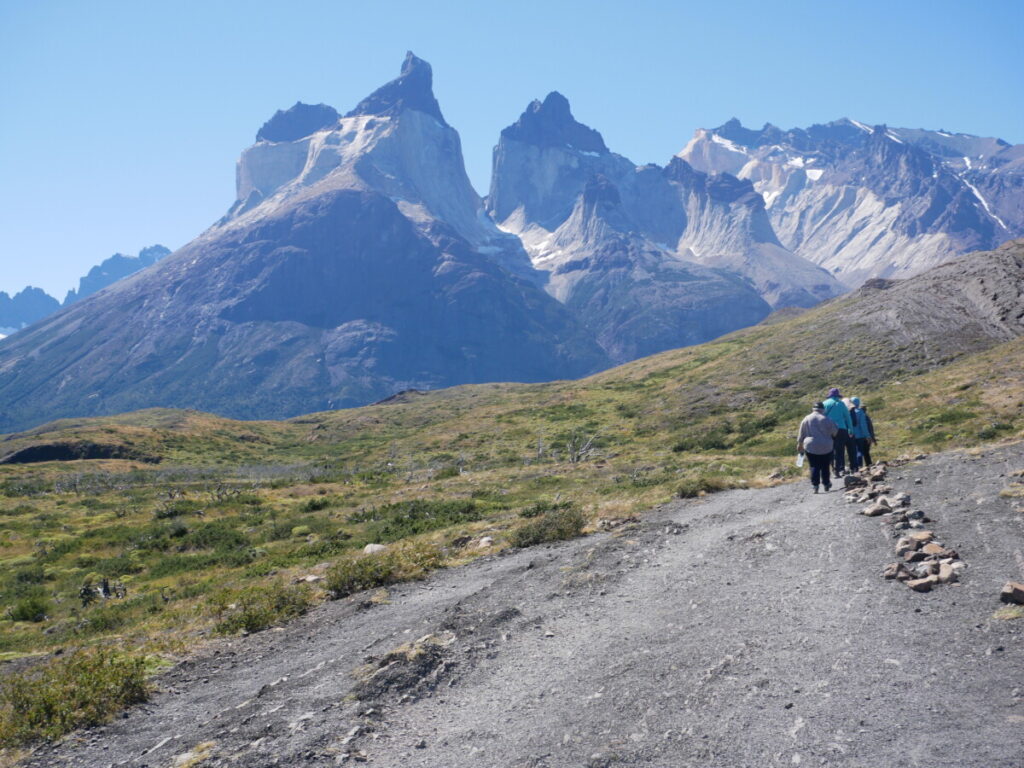
- Narrative: The Cuernos (Horns) del Paine dominate the skyline. The lake’s color reflects glacial flour and wind-driven sediment.
Section 3: Torres del Paine Viewpoints
Images 7–9
- Location: Near the Base of the Towers trailhead
- Features: Iconic granite spires, turquoise lake, clear sky
- Narrative: Classic views of the Torres, likely taken from Mirador Las Torres or en route. The massif is now fully revealed.
Section 4: Salto Grande Arrival
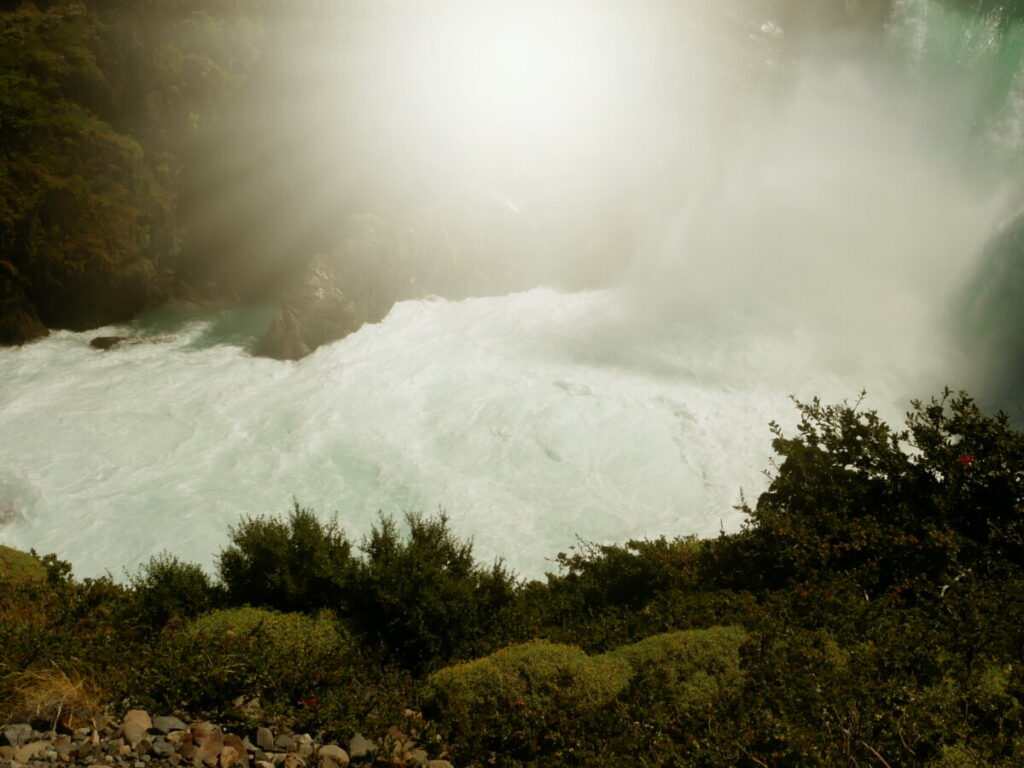
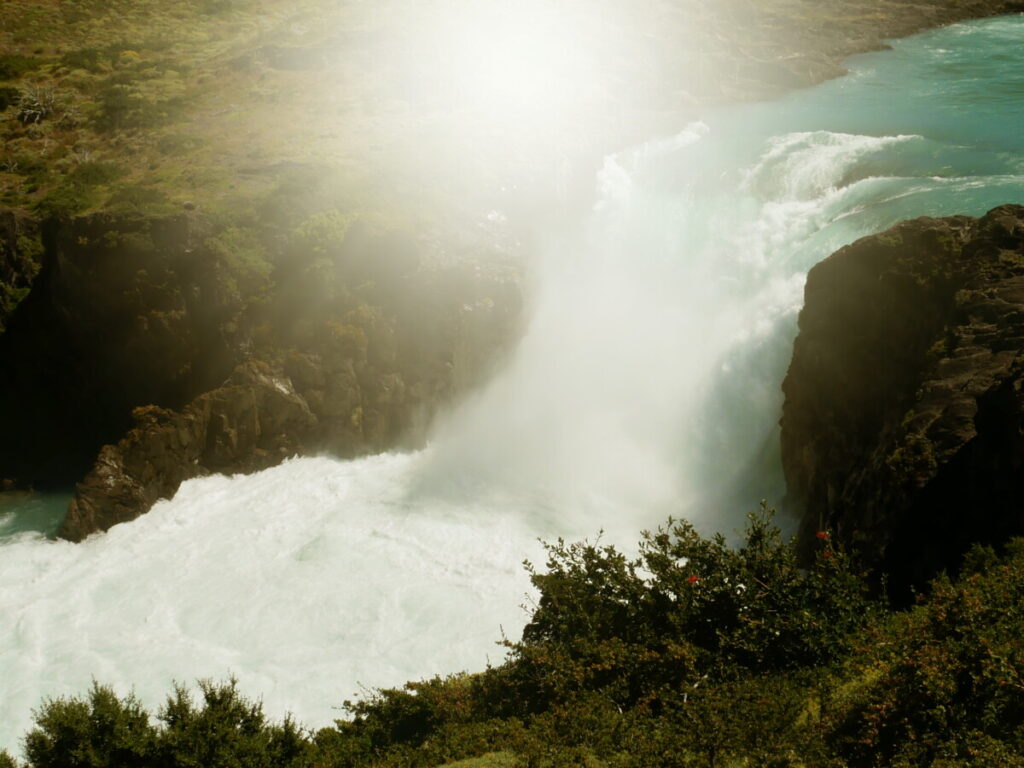
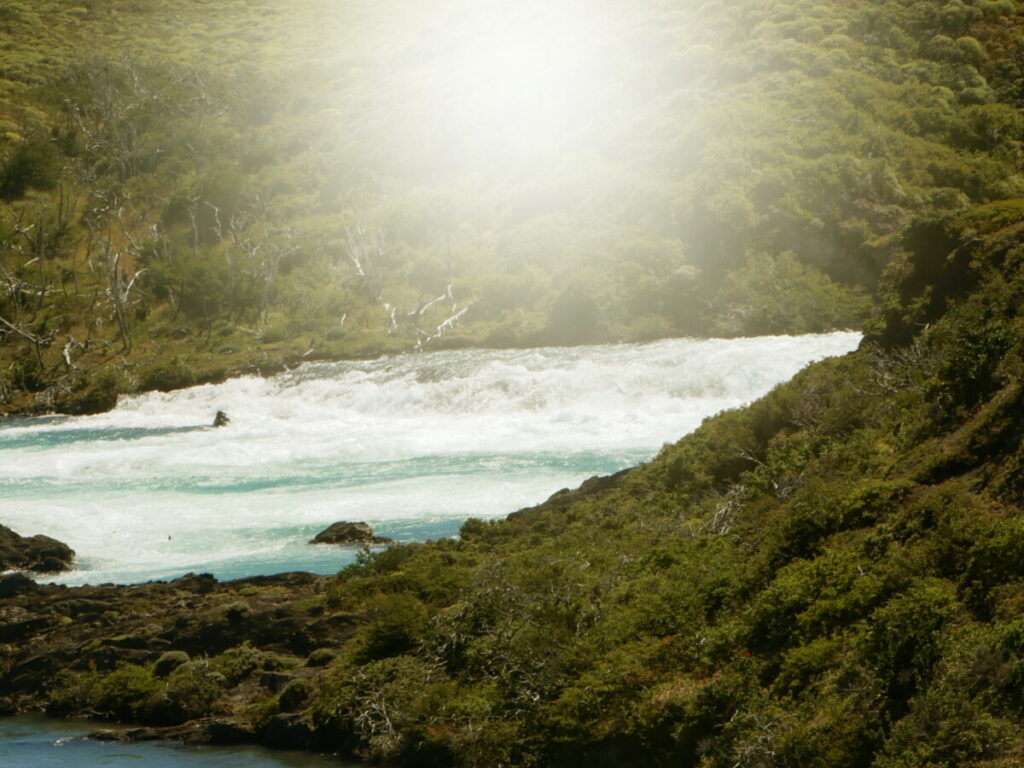
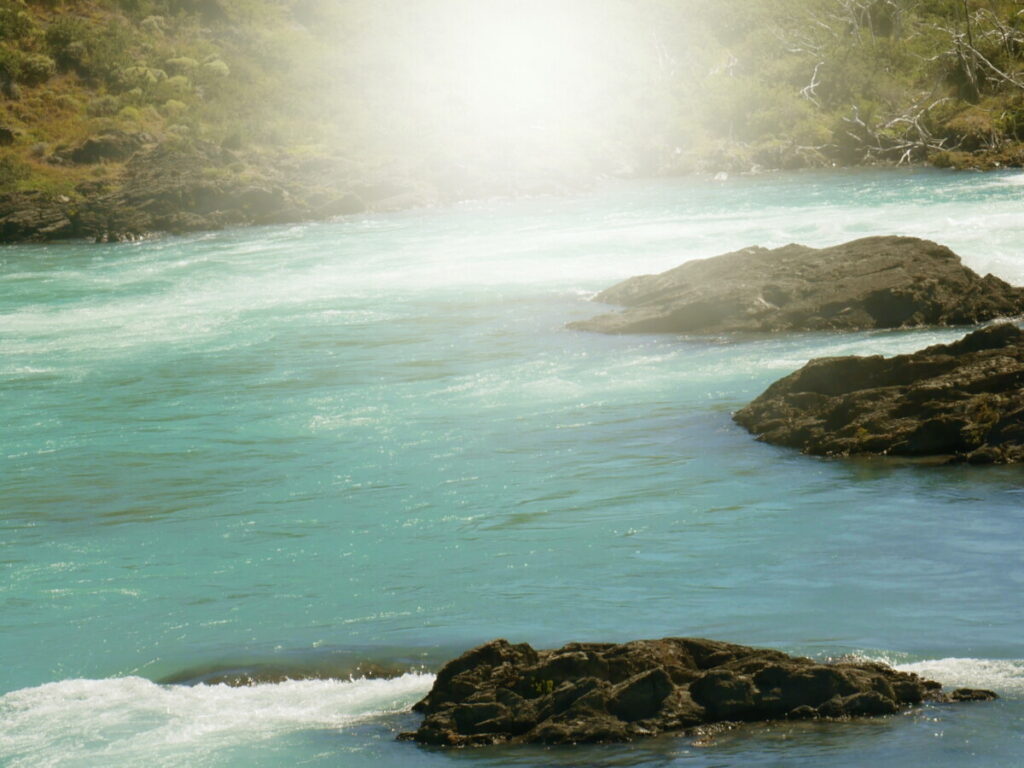
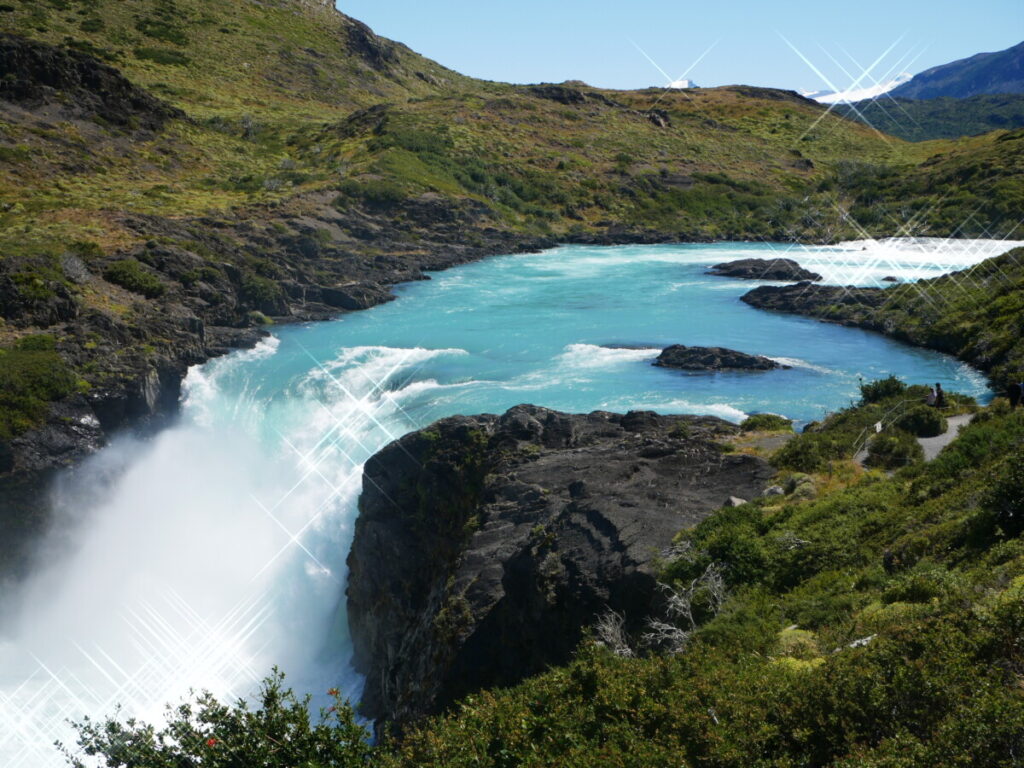
- Location: Parking area near Salto Grande waterfall
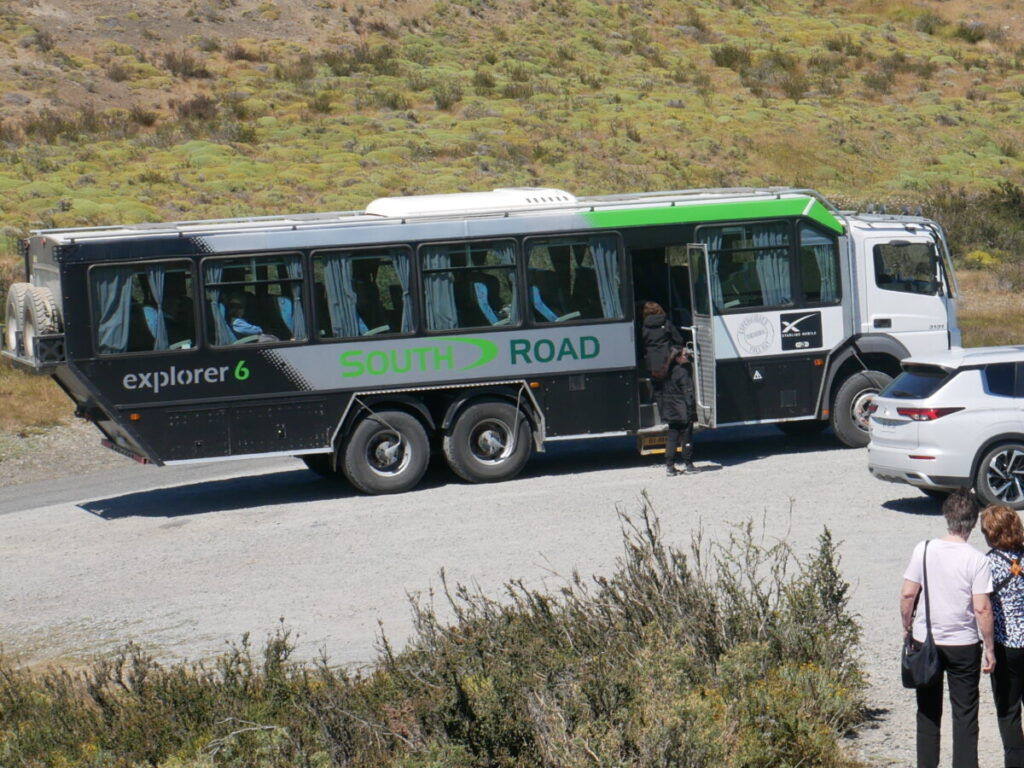
- Features: “Explorer 6” tour bus, rugged terrain, sparse vegetation
- Narrative: Your group arrives at the furthest point of the route. This marks the turnaround moment before retracing the journey.
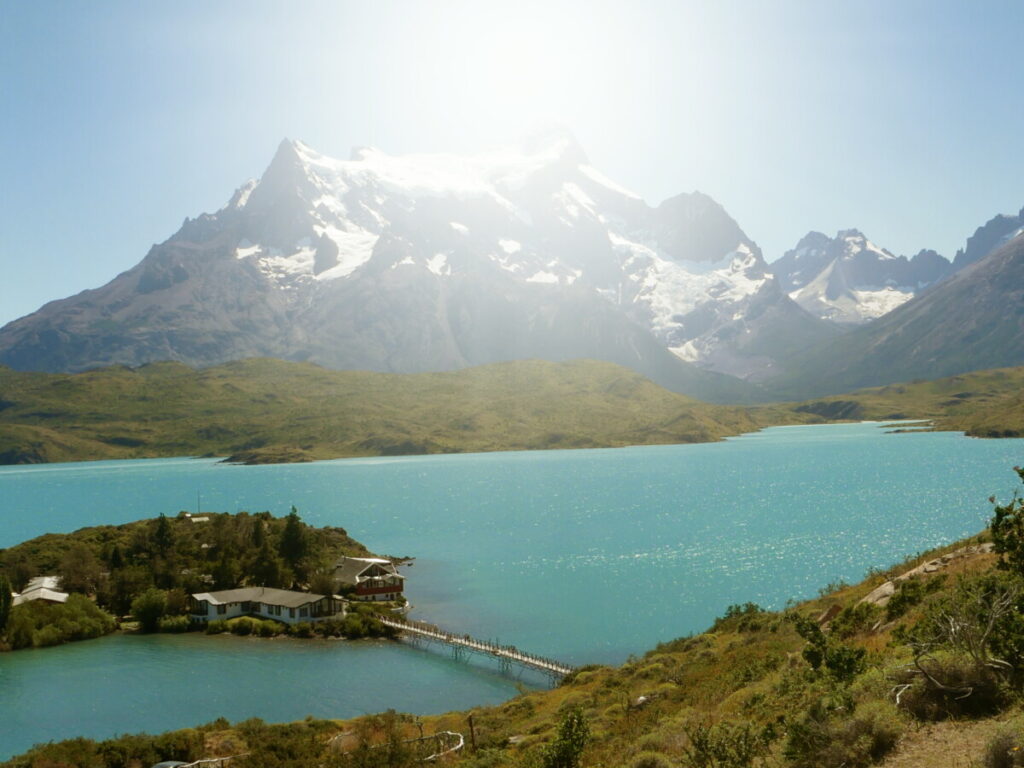
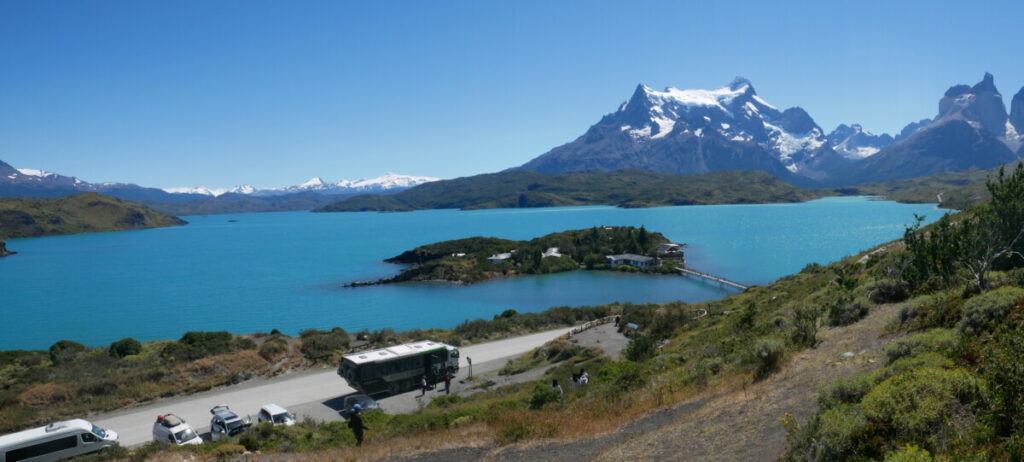
- Lake Pehoe with Island Hosteria and footbridge
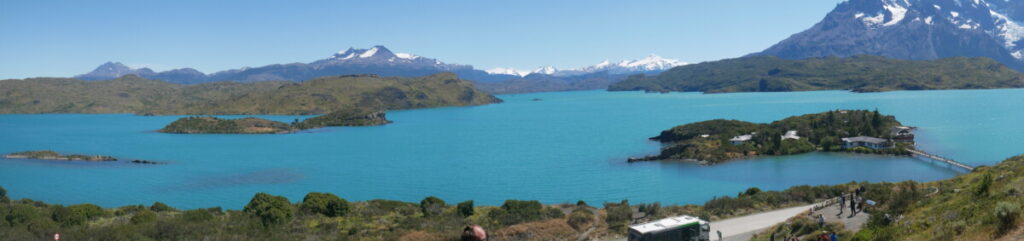
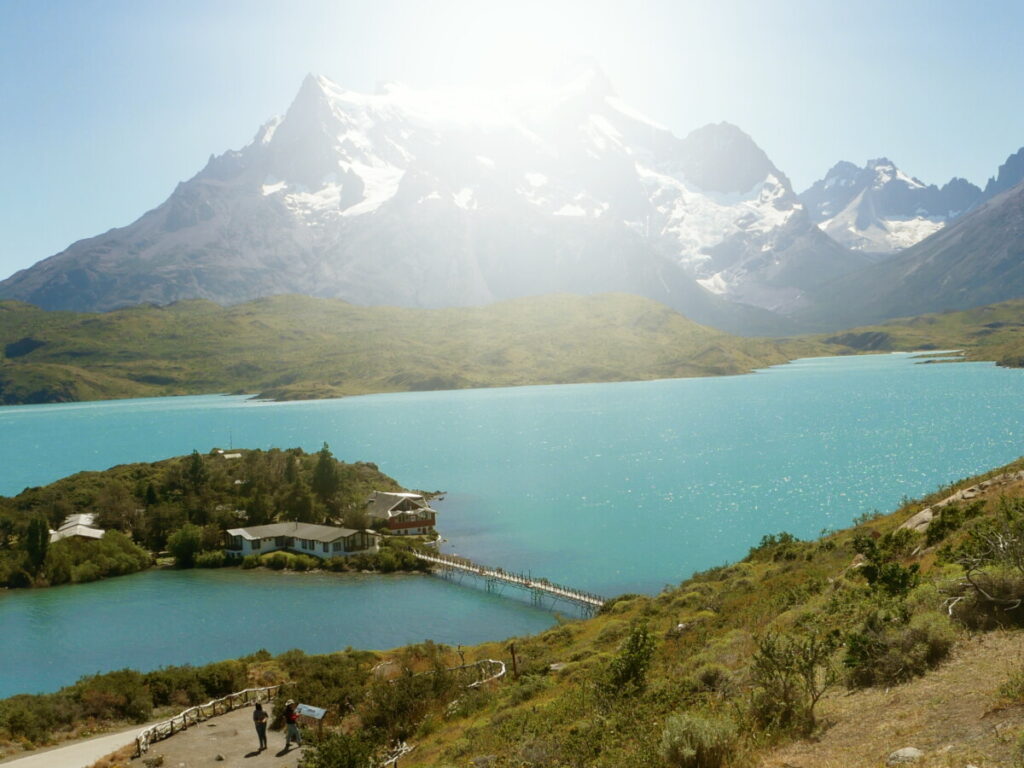
Glacier and Lake Pehoé Sequence
Location: Lake Pehoé and surrounding viewpoints
- Features: Turquoise lake, island lodge, footbridge, Cuernos del Paine
- Narrative: These images capture the heart of the park. The vivid color of Pehoé, the dramatic peaks, and the lodge on the island form the iconic visual climax of your route.
Section 6: Return Through the Valley
- Location: En route back to Laguna Amarga and Argentina
- Features: Winding river, road, grassy hills
- Narrative: The final leg of the journey. The landscape softens as you descend from the massif and re-enter the steppe.
Glacier and Lake Pehoé Sequence
- Location: Lake Pehoé and surrounding viewpoints
- Features: Turquoise lake, island lodge, footbridge, Cuernos del Paine
- Narrative: These images capture the heart of the park. The vivid color of Pehoé, the dramatic peaks, and the lodge on the island form the iconic visual climax of your route.
Comparison Graphic: The Colors of Patagonia’s Lakes
A side-by-side visual comparison of Lake Pehoé, Lake Nordenskjöld, and Laguna Amarga under sunny skies. Each lake’s color is shaped by its unique geology:
- Pehoé: Vivid turquoise from glacial flour and direct sunlight
- Nordenskjöld: Muted green-blue from sediment and wind
- Amarga: Pale green from mineral-rich alkaline water
Closing Reflection
This journey through Patagonia is more than a transit—it’s a geological and emotional immersion. From the shifting hues of glacial lakes to the vertical drama of granite towers, each stop reveals a new facet of nature’s architecture. The museum-style format preserves not just the visuals, but the story behind them
This is a landscape defined by extremes: vast pampas swept by relentless winds, lakes that shift color with the sky, and mountains that rise like fortresses from another world. The journey between these two iconic regions is not simply a transfer—it is an immersion into the raw architecture of Patagonia.
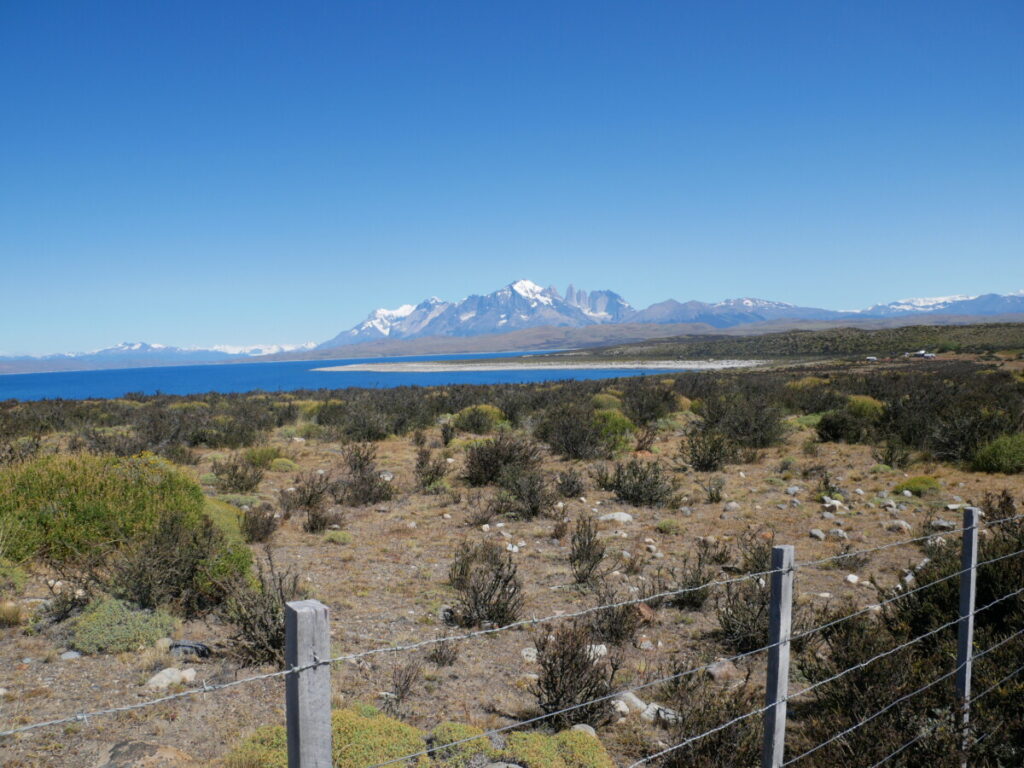
This is a landscape defined by extremes: vast pampas swept by relentless winds, lakes that shift color with the sky
El Calafate: Where Ice Shapes the Imagination
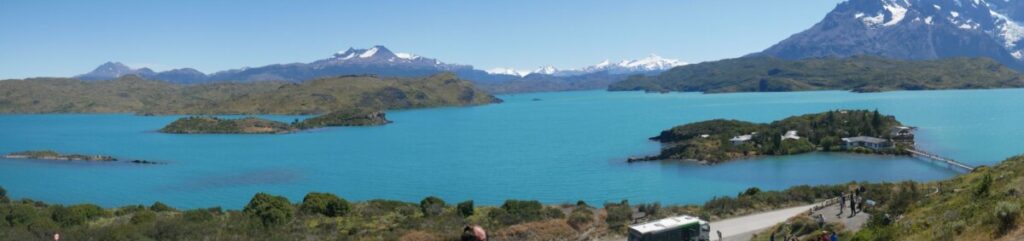
On the small island near the shore sits Hostería Pehoé, connected by a narrow footbridge—a scene that has become synonymous with Torres del Paine itself.
Finally, the road descends toward Lake Pehoé, the most photographed lake in the park and the one featured in your Image A. Its color is a brilliant, almost luminous turquoise, intensified by:
- High concentrations of suspended glacial sediments
- Direct sunlight that amplifies blue‑green scattering
- Exceptional water clarity fed by the Paine River and Salto Grande waterfall
Pehoé is framed by the Cuernos del Paine, whose dark sedimentary bases and pale granite caps rise like sculpted horns above the water. On the small island near the shore sits Hostería Pehoé, connected by a narrow footbridge—a scene that has become synonymous with Torres del Paine itself.
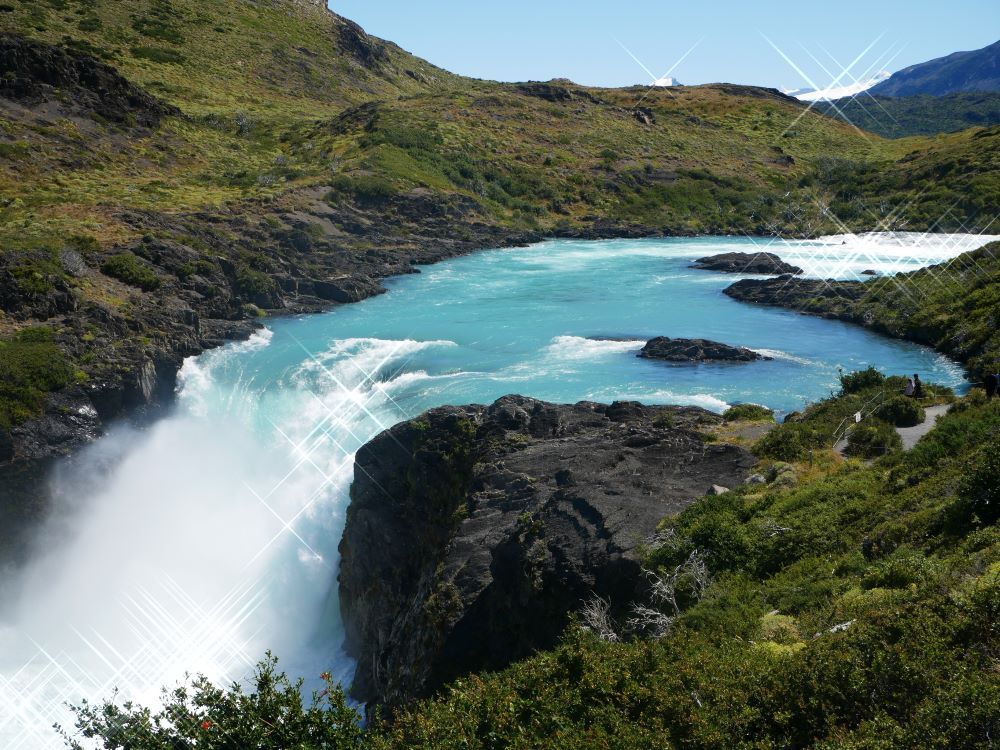
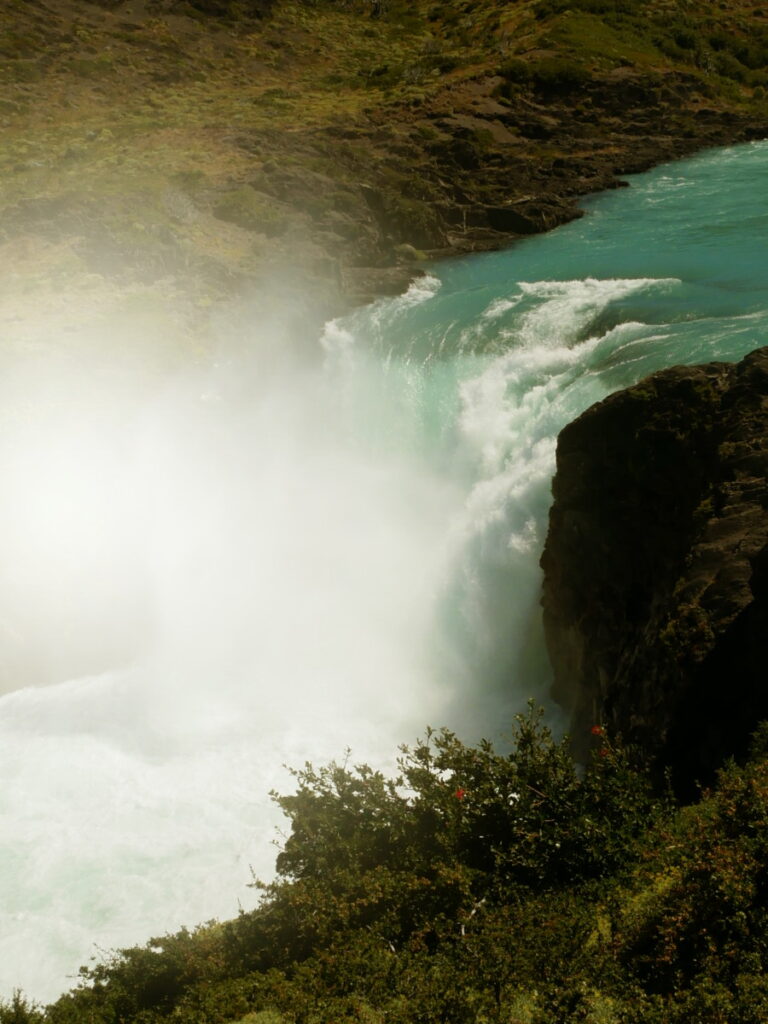
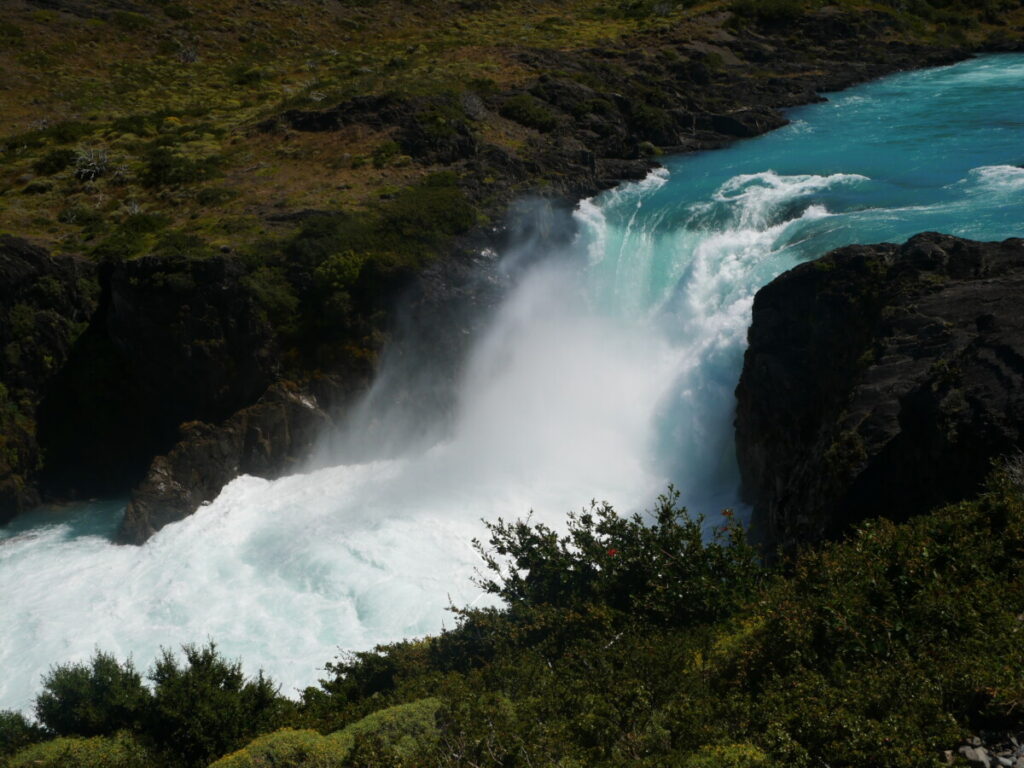
Salto Grande Waterfall Overview
- Height: ~15 meters
- Source: Water flows from Lake Nordenskjöld into the Paine River, then plunges into Lake Pehoé
- Trail: A short, well-marked 1.4 km round-trip hike from the parking area near Pudeto
- Difficulty: Easy; takes about 20–30 minutes
- Scenery: Surrounded by lush vegetation, dramatic cliffs, and views of the Cuernos del Paine
🧭 Why It’s Special
- The turquoise color of the water is intensified by glacial flour and sunlight, making it one of the most photogenic spots in the park.
- It’s a popular stop for day visitors and part of the Mirador Cuernos trail, which continues beyond the waterfall for panoramic views of the massif.