
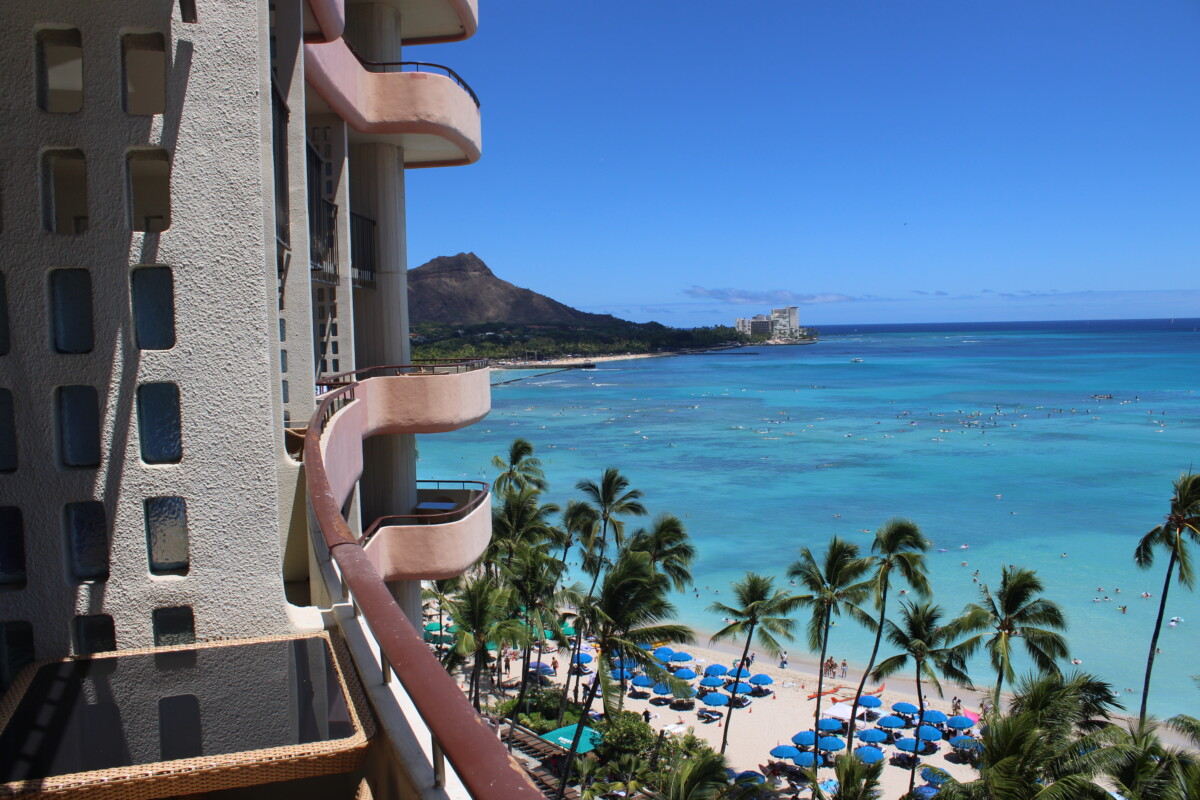
Points travelers, imagine stepping into a living piece of Hawaiian glamour—pink stucco glowing against Waikiki’s turquoise waters, where Hollywood legends once lounged and royalty still feels within reach. As a Marriott Luxury Collection property (perfect for Bonvoy points redemptions), The Royal Hawaiian lets you channel that old-world Pacific paradise vibe without the eye-watering rack rates. Use your points strategically during shoulder seasons or with suite upgrades, and you’ll live like a star on a savvy traveler’s budget.
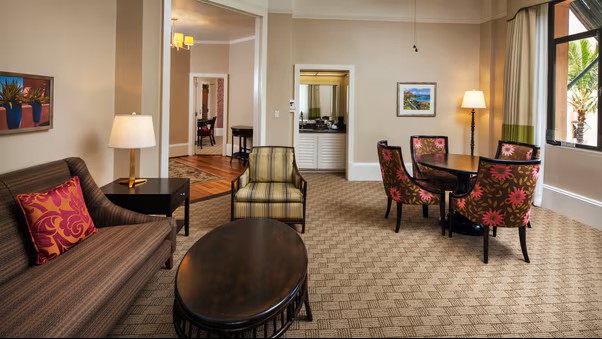
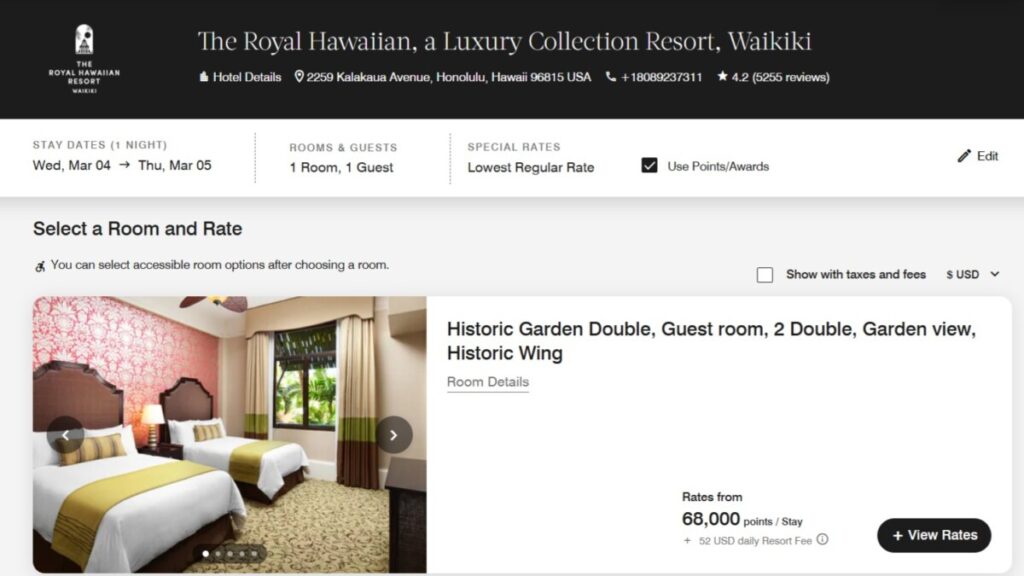
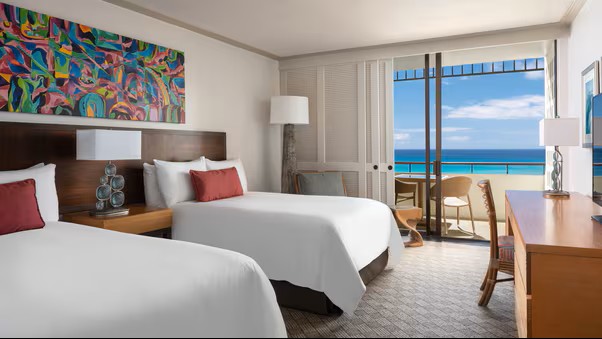
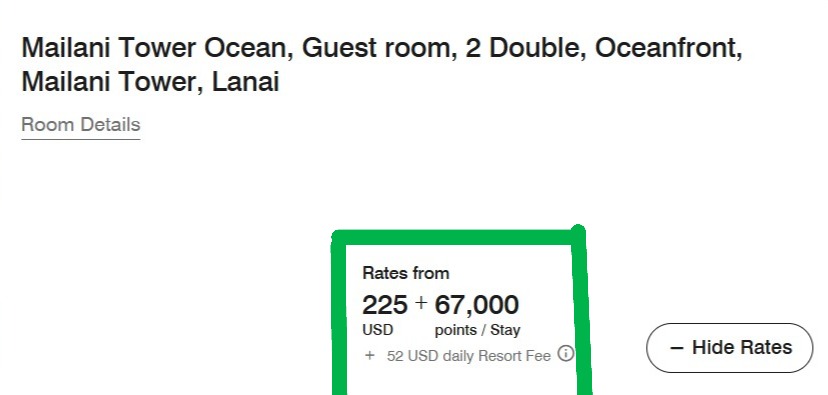
- Being flexible with travel dates can land you some excellent redemptions especially if you travel during off season. for Marriott Bonvoy members, dynamic pricing can often work in your favor when booking Luxury Hotels like the Royal Hawaiian, Honolulu . . The best time to find deals in points or local currency are January to February and July through August.
- Look for Cash + Points Offers. These are typically good valuations, and if you don’t quite have the points balance, it is a great way to get a superb room!
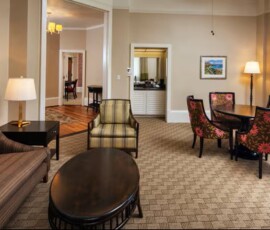
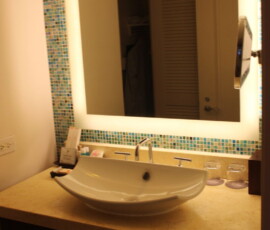
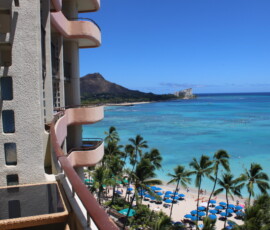
Points travelers, imagine stepping into a living piece of Hawaiian glamour—pink stucco glowing against Waikiki’s turquoise waters, where Hollywood legends once lounged and royalty still feels within reach. As a Marriott Luxury Collection property (perfect for Bonvoy points redemptions), The Royal Hawaiian lets you channel that old-world Pacific paradise vibe without the eye-watering rack rates. Use your points strategically during shoulder seasons or with suite upgrades, and you’ll live like a star on a savvy traveler’s budget.
Historical Significance
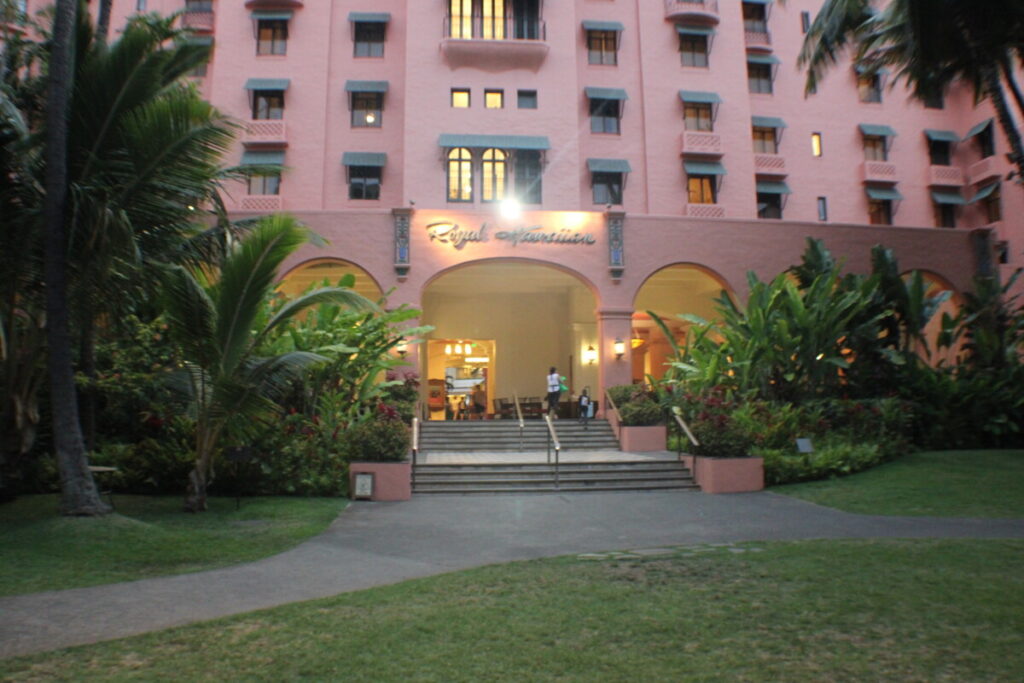
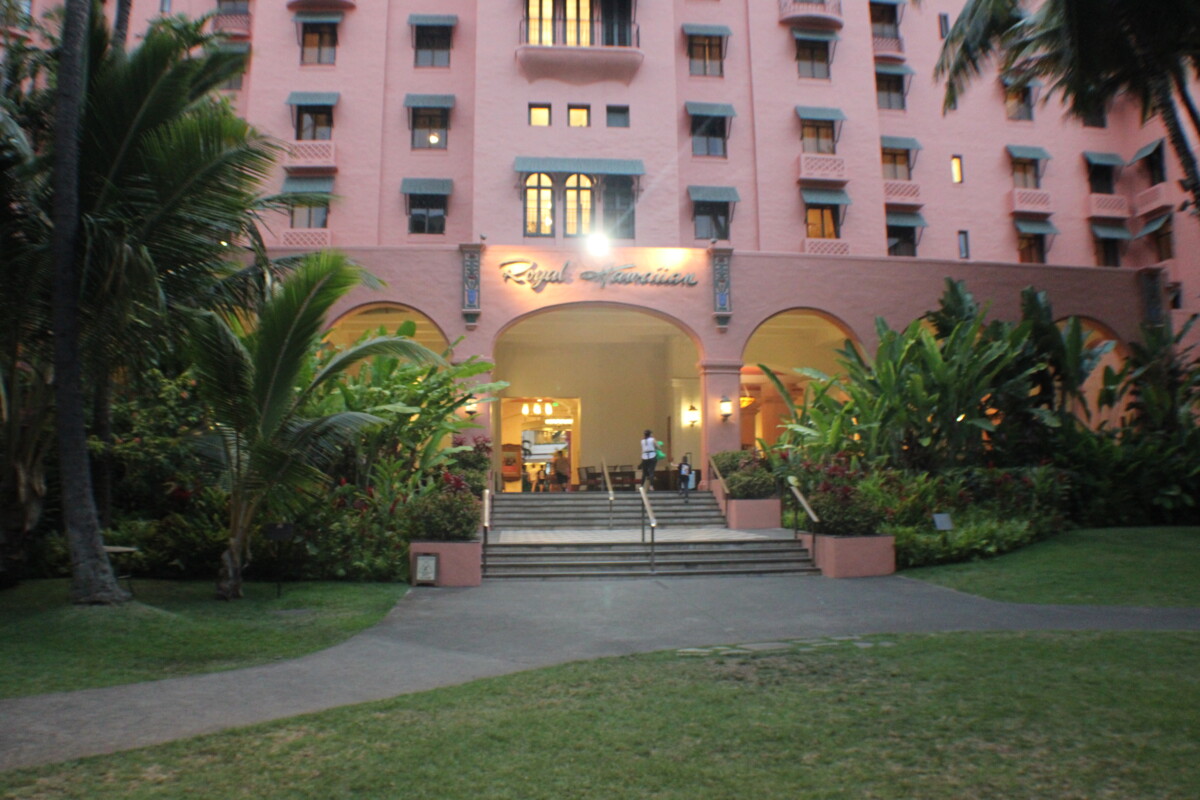
The Royal Hawaiian, affectionately dubbed the “Pink Palace of the Pacific,” opened on February 1, 1927, as one of Waikiki’s first true luxury resorts and a cornerstone of Hawaii’s emergence as a glamorous destination for wealthy travelers.
Built on 15 acres of prime beachfront that once served as a royal playground—King Kamehameha I maintained a residence here, and Queen Ka‘ahumanu’s summer palace stood in what is now the Coconut Grove garden—the hotel symbolized the shift from ancient Hawaiian ali‘i (chiefly) use to modern day.
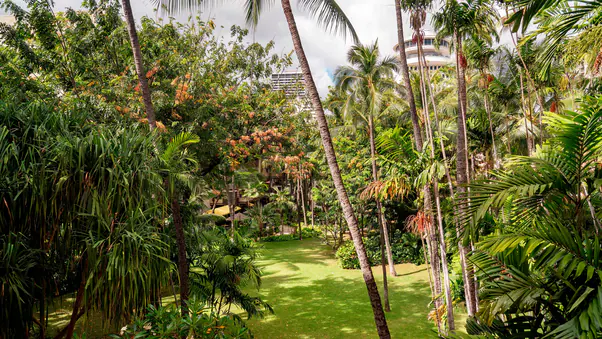
Coconut Grove garden—the hotel symbolized the shift from ancient Hawaiian ali‘i (chiefly) use to modern tourism.
Matson Navigation Company (in partnership with Castle & Cooke) invested $4 million (over $65 million today) to create a six-story, H-shaped Spanish-Moorish masterpiece designed by renowned New York architects Warren & Wetmore. The bright pink stucco façade, cupolas, and lush gardens quickly earned its iconic nickname within months of opening.
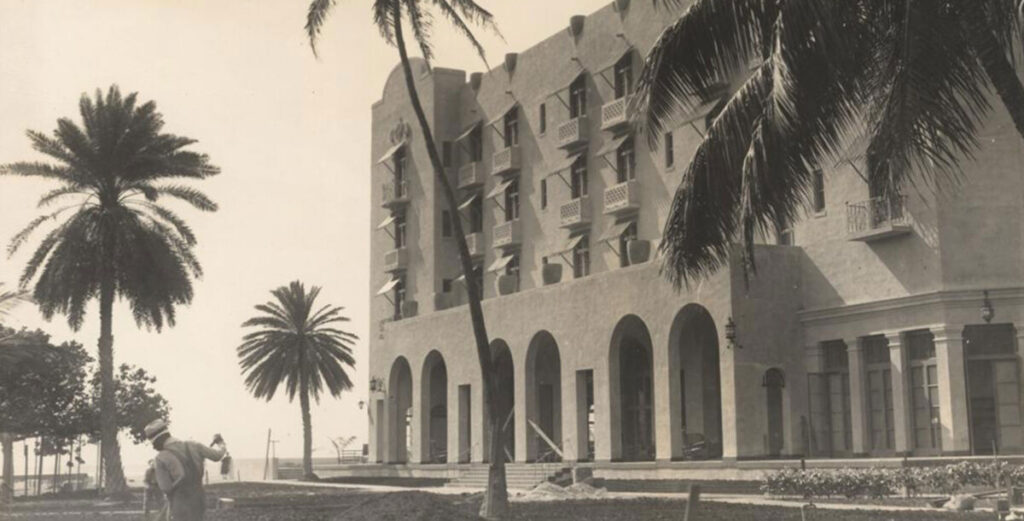
A lavish black-tie gala with 1,200 guests, the Honolulu Symphony, and $10-per-plate dinners marked the debut, billed as “the first resort hostelry in America.” It hosted the First Pan Pacific Conference in April 1927 and helped launch Waikiki as an international playground during the Roaring Twenties.
During World War II, after Pearl Harbor on December 7, 1941, the U.S. Navy leased the entire property exclusively as a rest-and-recreation center for submariners of the Pacific Fleet (beaches were barricaded with concertina wire, the Coconut Grove bar became a soda fountain, and the wine cellar was sealed). It reopened to civilians in February 1947 after extensive restoration.
Sold to Sheraton in 1959 and later to Kyo-ya Company (Japanese owners, with land leased from Kamehameha Schools), it remains a Historic Hotels of America member and a living testament to Hawaii’s golden age of elegant travel.
A lavish black-tie gala with 1,200 guests, the Honolulu Symphony, and $10-per-plate dinners marked the debut, billed as “the first resort hostelry in America.” It hosted the First Pan Pacific Conference in April 1927 and helped launch Waikiki as an international playground during the Roaring Twenties.
Famous People Who Have Stayed There
The Pink Palace has welcomed a who’s-who of 20th-century icons, cementing its status as Hollywood’s Hawaiian hideaway:
- Shirley Temple — The child star visited (reportedly in 1935), inspiring the hotel’s claim to inventing her namesake mocktail (ginger ale, grenadine, and maraschino cherries) in the Persian Room to give the young guest a “grown-up” drink.
- Clark Gable, Marilyn Monroe, Frank Sinatra, Elizabeth Taylor, Marlene Dietrich, Mary Pickford, and Douglas Fairbanks — Classic stars who frequented the resort during its golden era.
- U.S. Presidents Franklin D. Roosevelt and Lyndon B. Johnson, plus General Douglas MacArthur — Political and military figures who stayed for extended periods (FDR’s visits led some to call it the “Western White House”).
- Other notables — Joe DiMaggio, Duke Kahanamoku (Hawaiian surfing legend), Natalie Wood, Robert Wagner, and later celebrities like Kevin Costner, plus reports of The Beatles and the Shah of Iran.
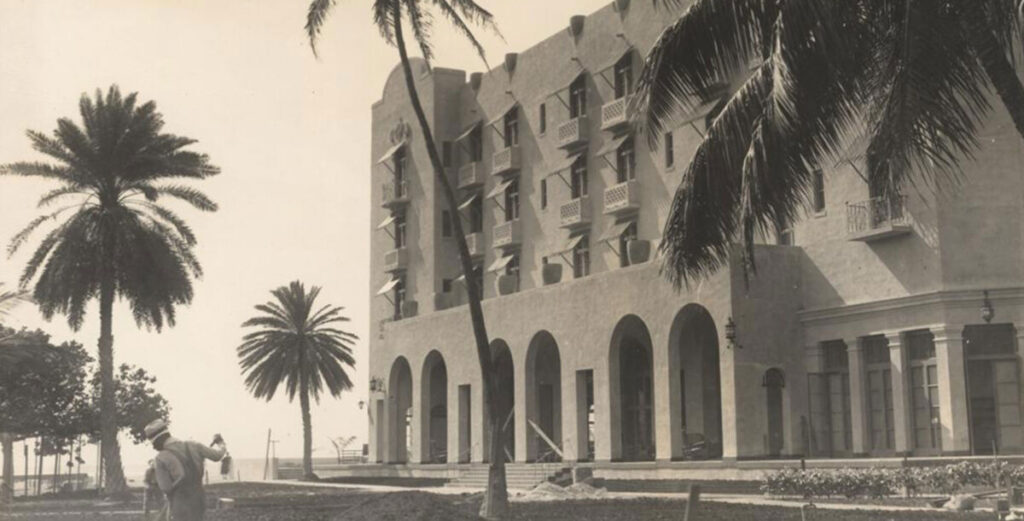
Elvis Presley stayed multiple times, including a 1973 visit right after his historic “Aloha from Hawaii” concert. The hotel has also appeared in films like The Black Camel (1931), Big Jim McLain (1952, lobby scenes), Gidget Goes Hawaiian (1962), and more recent productions.
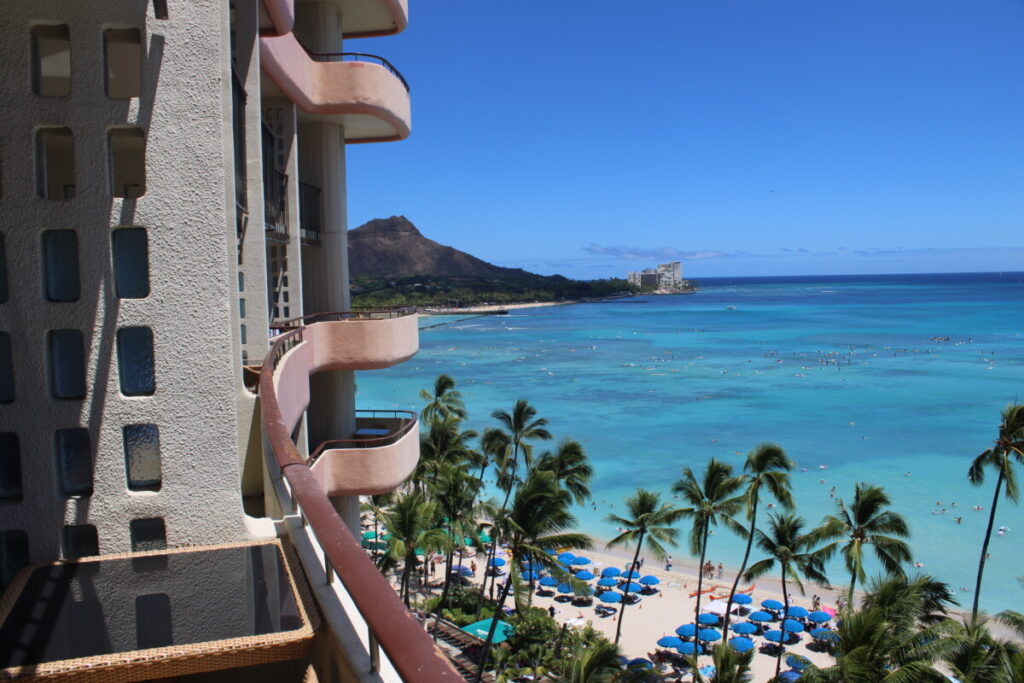
Today the resort offers 528 rooms total across the pink Historic Wing (garden/courtyard views) and Mailani Tower (prime ocean/Diamond Head vistas).
Other Interesting Facts
Pan Am Clippers: The Flying Boats That Linked the World—and Waikiki
/
- The hotel’s Mai Tai Bar claims deep roots in Waikiki’s cocktail culture (though the drink itself was invented nearby).
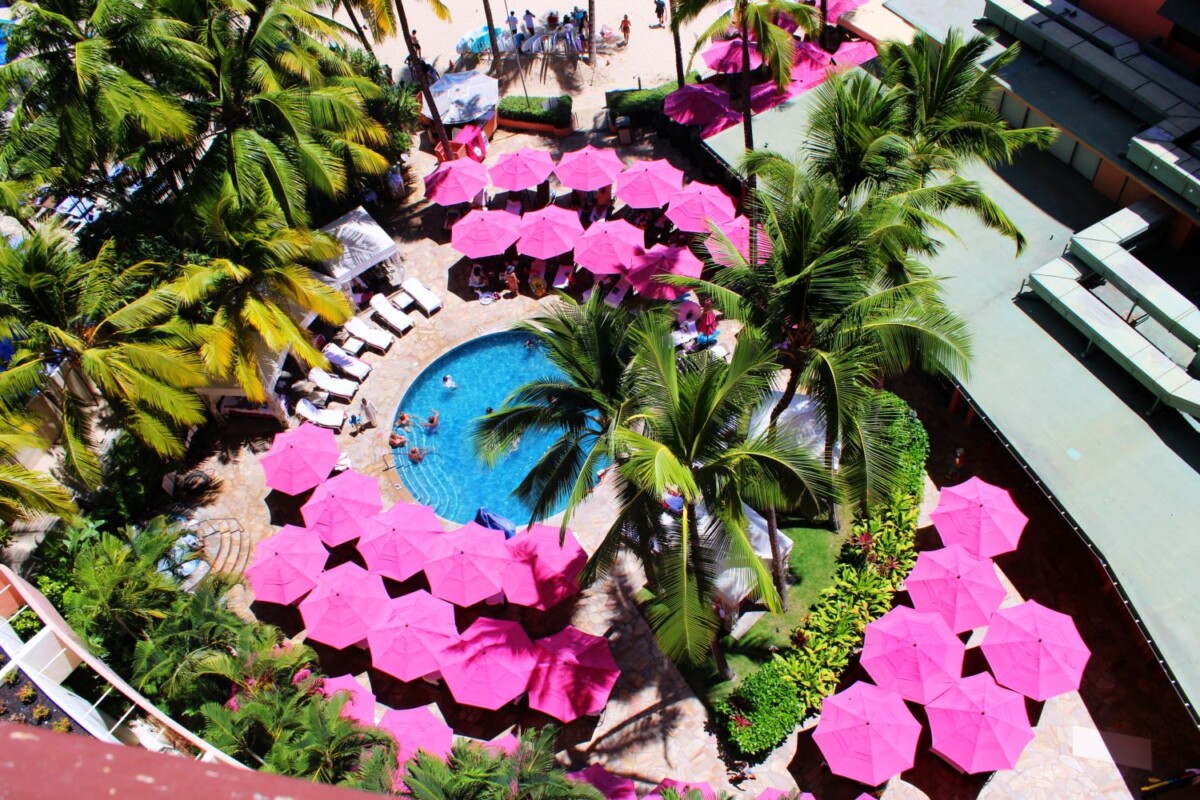
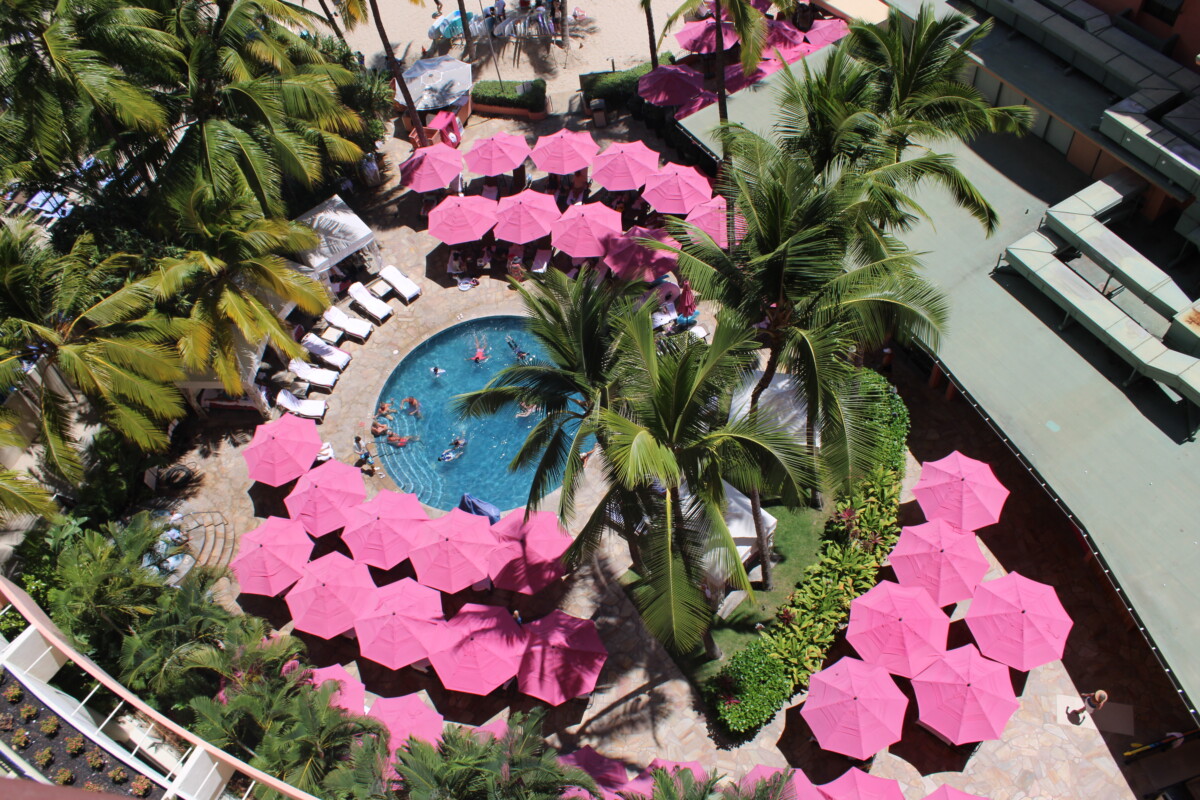
- It features pink umbrellas on its private beach section and hosts Waikiki’s only oceanfront luau with Diamond Head views.
- Weekly historical tours (Tuesdays/Thursdays) share insider stories—book ahead!
- Pop culture nods include Joni Mitchell’s “Big Yellow Taxi” reference to “the pink hotel” and appearances in Hawaii Five-O, Mad Men, and Hallmark films.
- The property blends old-world charm (brocade wallpaper, chandeliers in the historic wing) with modern perks, making it ideal for points redemptions—check Marriott Bonvoy for 5th-night-free awards or cash+points deals to keep costs low while enjoying royal treatment.
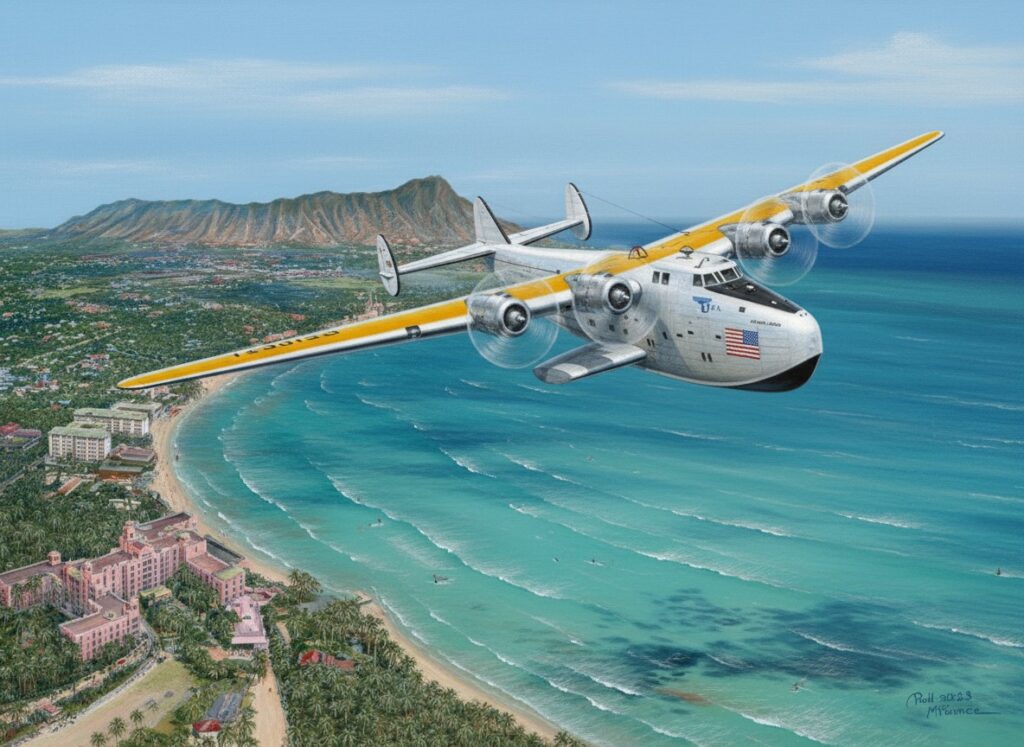
In the 1930s, crossing the Pacific was an epic adventure only the ultra-wealthy could afford. Pan Am’s legendary “Clippers” (named after swift sailing ships) made it possible with luxurious, multi-day flights on water-landing flying boats like the Martin M-130 (e.g., China Clipper) and the larger Boeing 314 (introduced 1939).
- Trans-Pacific Route & Honolulu Stopover: Pan Am launched the world’s first scheduled trans-Pacific airmail service in November 1935 with the China Clipper from San Francisco to Manila, via Honolulu, Midway, Wake, and Guam. Passenger service followed in October 1936 aboard the Hawaii Clipper (another Martin M-130). The grueling ~2,400-mile leg from San Francisco to Honolulu took 17–20 hours, often requiring an overnight in Waikiki before continuing south or west.
-
- Passengers—mostly elite travelers, celebrities, and business tycoons—were whisked by limo from Pearl Harbor (where the Clippers landed in protected waters like Middle Loch) straight to the Royal Hawaiian Hotel. They stayed overnight (or longer for rest/refueling), enjoying the Pink Palace’s beachfront luxury, luaus, and pink umbrellas. Crew often bunked at the Alexander Young Hotel downtown.
- This connection helped cement the Royal Hawaiian as the glamorous endpoint for the jet-set crowd arriving by air, long before commercial jets existed. Fares were astronomical—around $648 round-trip to Honolulu (equivalent to ~$14,000–$15,000 today), limiting it to the rich and famous.